You Decide: The Artists Handing Over the Controls to Anyone Paying Attention
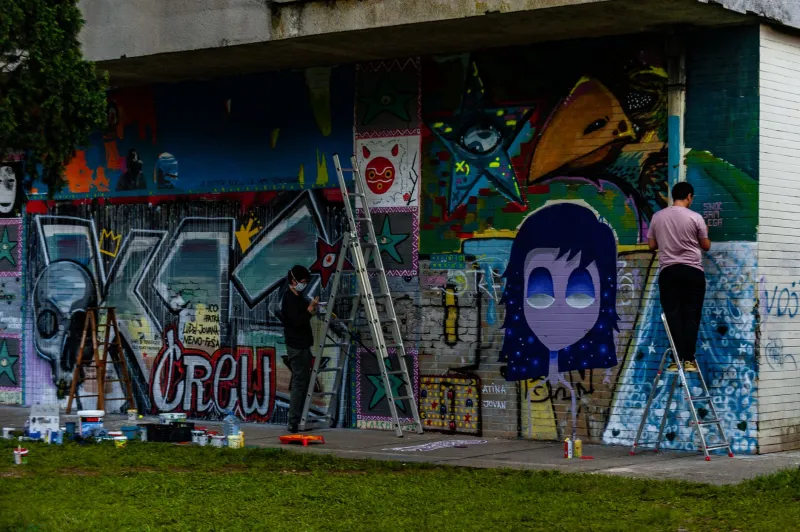
Last spring, a muralist in Chicago put a question to her mailing list: she had a wall, a commission, and no idea what to paint on it. Not because she lacked ideas — she had too many — but because she'd decided, deliberately, that she wasn't the right person to make the call. The neighborhood the mural would live in had been through a lot. It had opinions. She wanted to hear them before she picked up a brush.
What followed was six weeks of back-and-forth that looked less like a traditional community consultation and more like a running argument about memory, identity, and what public space is actually for. People showed up to meetings she didn't expect to show up. They disagreed with each other loudly. The final design was nothing like what she would have chosen on her own. She painted it anyway, exactly as the group decided.
"It's the best thing I've ever made," she says. "And I made maybe thirty percent of the decisions in it."
Giving Up the Wheel
Participatory art isn't new. Artists have been inviting audience input since at least the 1960s, when Fluxus practitioners started designing works that couldn't exist without the people in the room. But something is different now — both in the scale at which participation is possible and in how far some artists are willing to push the surrender of control.
We're not talking about suggestion boxes or post-show feedback forms. The projects worth paying attention to are the ones where audience decisions are binding, where the artist genuinely doesn't know how the work will end, and where the community's input doesn't just inform the work but constitutes it.
A novelist in Portland is writing a book in public, one chapter at a time, with readers voting on major plot and character decisions before each new section goes up. She's not summarizing votes and then doing what she wanted anyway — she's writing to the outcomes, even when they take her somewhere uncomfortable. A chapter she recently published, she says, required her to write a character she found morally repugnant, because the readers chose that direction. She wrote it. It's the chapter she's gotten the most mail about.
"There's this assumption that surrendering control means the work gets worse," she says. "What I've found is that it gets stranger. And stranger is usually better."
The Intimacy Problem
One of the unexpected side effects of this kind of radical participation is intimacy. When an audience knows that their choices actually shaped something — not symbolically, but structurally — their relationship to the finished work changes. They're not consumers. They're not even collaborators in the polite, credit-sharing sense. They're implicated.
A musician in Philadelphia has been running a project for three years in which monthly subscribers send him raw audio — field recordings, voice memos, ambient sound from their daily lives — and he composes from whatever arrives that month, with no curation rights. He takes everything. He uses it all. The resulting pieces are dense, sometimes chaotic, occasionally transcendent.
"People send me stuff they'd never share otherwise," he says. "Arguments with their partners. Their kid's first words. Traffic outside their window at 3am. Because they know it's going in. It changes what they're willing to give."
The audience, knowing their contribution is unconditional, offers more than they would if they thought it might be filtered out. And the artist, working with material he didn't choose, finds himself in territory he'd never have entered alone. The intimacy runs in both directions.
Who Gets Credit
These projects raise questions that the art world is genuinely not equipped to answer yet. Who authored the mural? Who wrote the novel? If a community of two hundred people made binding decisions about the form and content of a work, and one person executed those decisions, what exactly is the relationship between maker and made?
Most of the artists navigating this don't seem particularly interested in resolving the question. The muralist lists her community partners prominently alongside her own name. The novelist credits her readers collectively in the book's acknowledgments. The musician lists contributors by first name in each release.
But the deeper issue isn't about credit lines. It's about what authorship even means when the point is to make something that couldn't exist without other people's choices. Traditional artistic authorship assumes a single creative intelligence shaping material toward a vision. These projects assume something else — that the vision itself should be contested, shared, and ultimately owned by more than one person.
That's a genuinely different proposition. It's not a workshop. It's not a commission. It's something closer to a negotiation that happens to produce art.
Why Now
It's worth asking why this tendency is intensifying. Part of the answer is probably just access — the internet makes it possible to involve large numbers of people in real-time creative decisions in ways that weren't practical before. But another part of the answer feels more urgent.
A lot of artists working this way are explicit about the political dimension. Handing creative control to a community — especially communities that have historically been excluded from art institutions, from who gets to make decisions about public space, from whose stories get told — isn't just an aesthetic choice. It's a statement about who culture belongs to.
The Chicago muralist is clear about this. "The wall is in their neighborhood. The least I could do was ask who should be on it."
That's the thing about this kind of work. It looks, on the surface, like a formal experiment in authorship. Underneath, it's a question about power — and who gets to hold it when something is being made.