Broken and Beautiful: How Artists Are Making Gold Out of Glitches
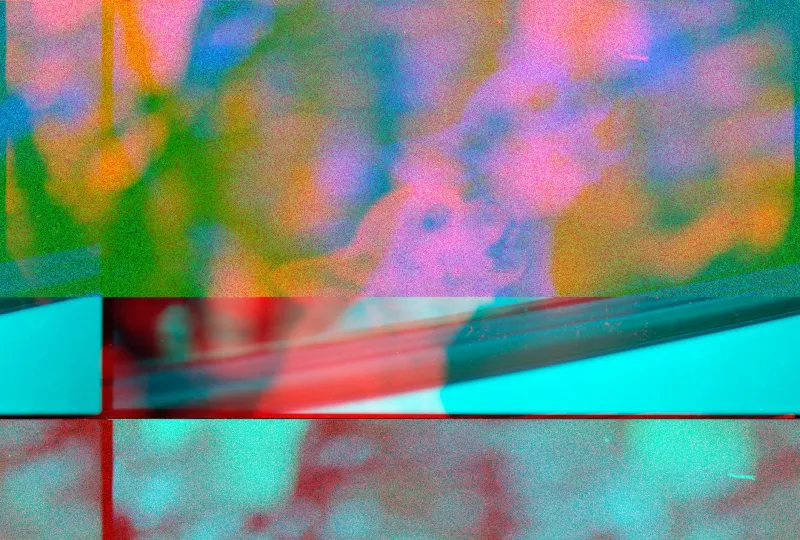
Somewhere in a studio apartment in Detroit, an artist named Keshia is deliberately feeding a video file into broken software. She's not trying to fix it. She's waiting to see what it becomes. The colors bleed. Faces smear across the frame like wet paint. Motion artifacts stack on top of each other until the original footage is basically unrecognizable. That's the point.
This is glitch art — and if you think it's just a niche digital quirk, you haven't been paying attention.
The Error Is the Message
For most of computing history, a glitch was something you apologized for. A corrupted file was a disaster. A crash meant lost work, lost time, lost money. The entire architecture of mainstream tech culture is built around the elimination of failure — smooth interfaces, autosave, redundant backups, seamless streaming. We've built a world that pretends errors don't exist, and we've built an aesthetic culture to match it.
Glitch artists are calling that bluff.
When a JPEG gets corrupted, the compression algorithm that holds the image together starts to fall apart. What you get isn't a blank screen — you get something stranger and more revealing. Blocks of color where faces should be. Repetition where there should be motion. The hidden math of the image suddenly made visible. For artists working in this space, that's not a malfunction. That's the machine finally telling the truth about how it works.
There's a whole philosophical tradition here that doesn't get enough credit. Theorists have been writing about productive failure for decades — about how systems reveal themselves most clearly at the moment of breakdown. Glitch artists didn't invent that idea, but they're living it in real time, frame by frame.
Circuit Bending and the Joy of Not Knowing
Before digital glitch aesthetics had a name, there was circuit bending. Starting in the late 1960s and picking up serious momentum through the DIY underground of the '90s and 2000s, circuit benders would crack open cheap electronic toys — Speak & Spell machines, Casio keyboards, Fisher-Price gadgets — and start touching exposed circuits with wire or their own fingers. The result? Sounds the manufacturers never intended. Drones, squeals, alien rhythms, noise that felt somehow more alive than anything the device was designed to produce.
Reed Ghazala, often credited as the grandfather of circuit bending, described the practice as a kind of collaboration with chance. You don't design the outcome. You create the conditions for something unexpected to happen and then you listen.
That spirit is alive and well in contemporary glitch practice. Artists like Takeshi Murata and Rosa Menkman have built entire bodies of work around the aesthetics of digital breakdown — Menkman even wrote what she calls the "Glitch Studies Manifesto," arguing that the pursuit of perfect resolution and seamless transmission actively suppresses the more interesting, more truthful aspects of how media actually functions.
Datamoshing and the Politics of the Imperfect
One of the most visually striking glitch techniques right now is datamoshing — a process that exploits the way video compression works to create those signature smearing, melting effects you've probably seen in experimental music videos and art installations. Compression algorithms don't save every frame of a video — they save a reference frame and then only record the changes between frames. Datamoshing removes or duplicates those reference frames, causing the motion data from one clip to bleed into the still image of another.
The result looks like footage that's dreaming. Or drowning. Or both.
What makes datamoshing interesting beyond its visual wow factor is what it implies politically. The glitch reveals the seams of the technology — shows you the compression, the shortcuts, the way the system is cutting corners to create the illusion of seamless reality. In a media environment where that illusion is doing enormous ideological work — where smooth, confident presentation is how power signals legitimacy — making the seams visible is genuinely subversive.
You're not just making something weird-looking. You're showing people that the picture was constructed in the first place.
Against Perfectionism as an Ideology
There's something else going on here that deserves more attention: glitch art as a direct challenge to perfectionism culture.
We live in a moment where the pressure to produce flawless output — in creative work, in professional life, in the curated performance of self on social media — is genuinely crushing people. The tools available to artists now can produce incredibly polished results, and that capacity has quietly become an expectation. If you can make something perfect, why wouldn't you? And if you don't, what does that say about you?
Glitch practice pushes back on that whole framework. It says: the error is data. The failure is interesting. The imperfect thing has value precisely because of its imperfection, not in spite of it.
This isn't just aesthetic preference. It's a values statement. It insists that the messy, the broken, and the unresolved deserve space — in art galleries, yes, but also in the broader conversation about what counts as good work and who gets to decide.
Finding the Community
The glitch art community in the US is diffuse but real. Online forums, Discord servers, annual events like the GLI.TC/H festival, and platforms like Rhizome have kept the conversation going for years. Artists share techniques freely, argue about whether something is "really" glitch art or just a filter, and push each other toward stranger territory.
What's notable is how little gatekeeping there is. You don't need expensive equipment. You need curiosity and a willingness to break things. Some of the most striking glitch work being made right now is coming from artists using free software, thrift store electronics, and a genuine appetite for not knowing what's going to happen next.
That accessibility matters. It means the practice isn't owned by anyone with an MFA or a gallery relationship. The barrier to entry is basically: are you willing to let something go wrong?
What the Machine Is Trying to Tell You
Here's the thing about glitches that keeps coming up when you talk to artists in this space: they don't feel random. They feel like the machine expressing something it can't say any other way.
Maybe that's projection. Probably it is. But there's something genuinely moving about an image that breaks down into pure abstraction, or a sound that escapes the grid of its original programming and becomes something feral and strange. It feels like honesty. Like the technology dropping its professional demeanor for a second and showing you what's actually happening underneath.
In a culture that's increasingly mediated by systems designed to be invisible, making those systems visible — even through their failure — is a form of truth-telling. And truth-telling, however messy and corrupted and hard to look at, is still one of the most radical things an artist can do.