Error Messages as Art Statements: The Creators Who Made Failure Their Medium
There's a specific kind of panic that hits when a video file won't open right. The colors smear. Faces stretch into something inhuman. The audio stutters into a sound no instrument could make. For most people, that's a cue to hit restart. For a growing number of artists, it's a cue to hit record.
The glitch aesthetic — a visual and sonic language built from technical malfunction — has been quietly evolving from a niche digital art curiosity into something that looks a lot like a genuine cultural position. It's not just about what looks cool. It's about what these broken images are actually saying.
The Machine Wasn't Supposed to Show Its Work
Polished design has a politics to it. Corporate visual culture — the smooth gradients, the crisp sans-serif fonts, the images scrubbed clean of any texture — communicates control. It says: we have it together, everything is functioning, trust us. The aesthetic of competence is, in many ways, the aesthetic of power.
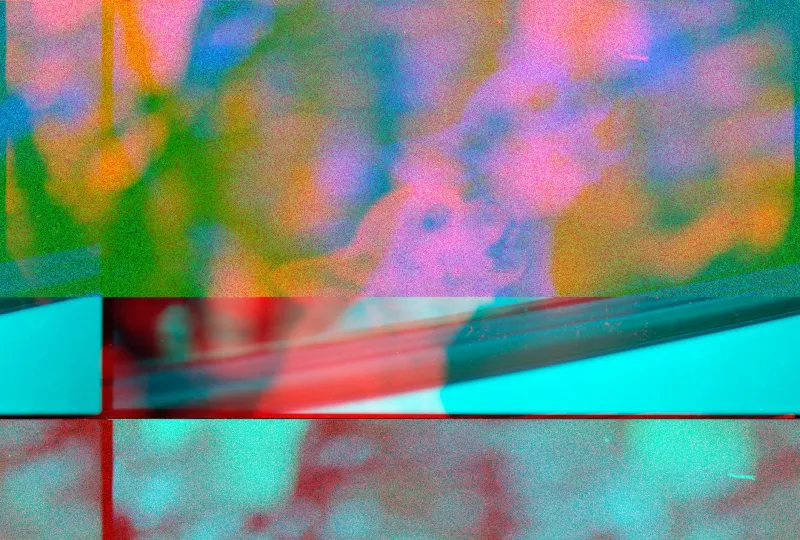
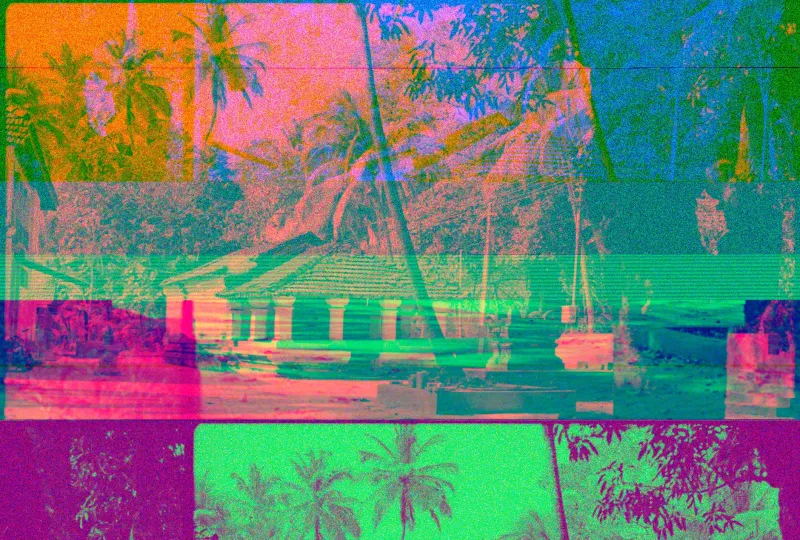
Glitch art pushes directly against that. When an image corrupts, it reveals the underlying data structure — the arbitrary encoding decisions, the compression algorithms, the infrastructure that usually stays invisible. A smeared JPEG isn't just ugly; it's a moment where the machine accidentally shows you its skeleton.
Artists working in this space are increasingly explicit about the political dimension. The choice to leave the error in — or to deliberately introduce one — is a refusal to participate in the fiction of seamlessness. It's a way of saying: everything you're looking at is constructed, and here's the proof.
Databending, Datamoshing, and the Vocabulary of Corruption
The technical methods vary widely. Databending involves opening a file in software that wasn't designed to read it — importing an image file into an audio editor, for instance, and then applying effects before re-saving it as an image. The results are unpredictable in the best possible way. Smeared color fields, repeating fragments, visual noise that somehow still carries the ghost of the original image.
Datamoshing works differently, targeting video compression specifically. When a video file compresses, it doesn't save every frame as a complete image — it saves the changes between frames. Datamoshing removes the keyframes that reset the image, so the movement data from one scene gets applied to the visual content of a completely different one. Faces melt into architecture. Bodies dissolve into color fields. It's disorienting in a way that feels almost emotional.
Then there's the simpler, more direct approach: just physically damage the media. Scratching a CD. Putting a magnet near a floppy disk. Running a video cassette through a demagnetizer. The analog version of glitch has its own distinct texture — warmer, more chaotic, less geometric than its digital cousin.
Not Nostalgia, Not Novelty
It would be easy to dismiss glitch aesthetics as nostalgia — a retro fetish for the visual language of early computing. And sure, some of it is that. But the more interesting practitioners are doing something else entirely.
They're treating malfunction as a form of honesty. In a media environment saturated with AI-generated imagery, heavily filtered photography, and video that's been color-graded to within an inch of its life, the glitch functions as a kind of proof of realness. It's a mark that no algorithm smoothed away. It happened. The machine broke, and nobody fixed it.
There's also something happening around authenticity and corporate co-optation. The moment an aesthetic gets clean enough, it gets absorbed. Brands start using it. It becomes a style guide entry. The glitch is, by its nature, resistant to that process — you can't trademark noise, and you can't quality-control corruption. Every glitch is genuinely unrepeatable.
When the Aesthetic Becomes Activism
Some artists working in this space are connecting the visual language of malfunction directly to political content. Corrupted footage of surveillance cameras. Databent images of corporate logos. Datamoshed news broadcasts where the anchor's face dissolves mid-sentence into static.
The message isn't subtle, but it doesn't need to be. When you take an image of institutional authority and break it — visually, technically, at the level of the file itself — you're doing something more than making an interesting picture. You're demonstrating, in a very literal way, that these systems are fragile. That they depend on infrastructure. That they can fail.
For artists working at the intersection of tech criticism and visual culture, that demonstration matters. It's one thing to write an essay about how digital systems concentrate power. It's another to show someone a video where the system is visibly, audibly falling apart.
The Tension of Going Mainstream
Here's the uncomfortable part: glitch aesthetics are everywhere now. Music videos. Fashion photography. Video game trailers. Somewhere between underground art practice and cultural moment, the broken image became a brand asset.
Artists who've been working in this space for years have complicated feelings about it. On one hand, wider visibility. On the other, the exact thing glitch was supposed to resist — the smoothing, the packaging, the commodification — has started to happen to glitch itself.
The response from many practitioners has been to go further. Deeper corruption. More aggressive databending. Work that's genuinely difficult to look at, that resists being used as a backdrop for a sneaker ad. If the mainstream wants the aesthetic of malfunction, fine — but they can have the mild version. The real work keeps breaking.
That tension is, honestly, part of what makes this moment interesting. The glitch aesthetic is staging the same fight that every resistant art movement has staged: how do you stay genuinely disruptive when disruption becomes desirable? There's no clean answer. Just more errors to introduce, more files to corrupt, more systems to break on purpose.