Make It Unwatchable: The Artists Deliberately Boring the Algorithm to Death
Photo: JelenD5, CC BY-SA 4.0, via Wikimedia Commons
There's a video circulating — well, not circulating, actually, which is the whole point — that runs for forty-seven minutes. It's a single locked-off shot of a parking lot in Bakersfield, California. Nothing happens. A pigeon lands. A pigeon leaves. The audio is ambient wind and the occasional distant truck. The resolution is so low it looks like someone filmed it through a shower door. It has 112 views.
The artist who made it considers that a success.
"If it had gone viral, I would have failed," says Marta, a video artist based in Los Angeles who asked that her last name not be used. "The whole thing was designed to be indigestible. To the platform, to the algorithm, to the part of your brain that's been trained to swipe away anything that doesn't hook you in three seconds."
Marta is part of a loose, largely unorganized current of artists who are doing something counterintuitive in an attention economy that rewards optimization above all else: they are deliberately making work that resists it. Not bad work — that's the key distinction — but work engineered to be structurally incompatible with the metrics that determine what gets seen.
The Algorithm as Aesthetic Enemy
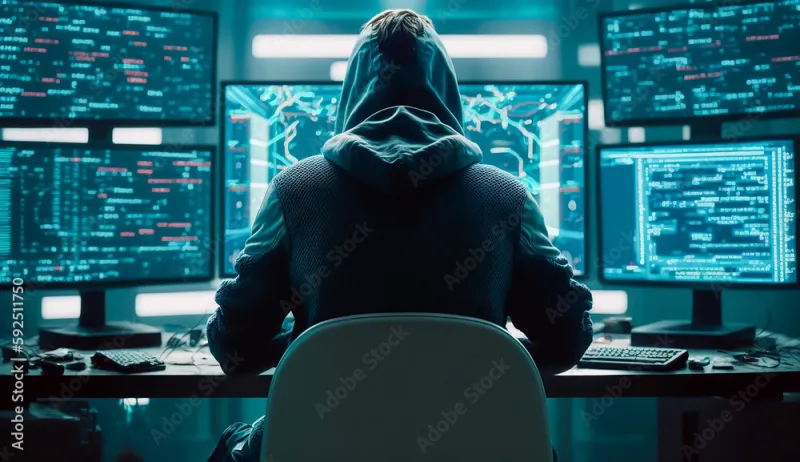
To understand why this matters, you have to understand what the algorithm actually wants. Broadly speaking, every major content platform — YouTube, Instagram, TikTok, even Spotify — runs on engagement data. Watch time, shares, saves, comments, replays. The longer someone stays, the more the platform shows your work to other people. The more shareable a thing is, the more it spreads. This creates enormous pressure on creators to make work that is hooky, punchy, emotionally legible, and brief.
For a lot of commercial content, that's fine. For art that's trying to do something more complicated — something slower, stranger, more demanding — it's a structural problem. The algorithm doesn't just ignore difficult work; it actively suppresses it by showing it to fewer people every time engagement metrics come up short.
"You're not just competing with other artists," says Darius, a Chicago-based sound artist who makes hour-long drone compositions that he releases exclusively as uncompressed audio files too large for most streaming platforms to host efficiently. "You're competing with the entire optimized media environment. Cat videos. Outrage content. True crime. Everything that's been A/B tested to death to maximize the dopamine hit. If your work isn't doing that, the system treats it like it doesn't exist."
His response was to stop trying to exist within it.
Boring as a Technology
The artists doing this most deliberately have developed what you might call an aesthetics of friction. Marta shoots in the lowest resolution her camera allows. Darius makes his files as large and unwieldy as possible. A performance collective in Brooklyn called Threshold runs shows that are explicitly scheduled to last longer than any reasonable person would stay — their last piece ran six hours, in a room with no chairs, with a single performer reading aloud from a 1987 municipal water treatment report.
"We sold out," says Threshold co-founder Renee. "Twenty-two people came. Two stayed for the whole thing. We consider that a triumph."
None of these works are designed to be shared. They don't have quotable moments. They resist the screenshot. They produce almost nothing that could be clipped into a fifteen-second highlight reel. And that refusal is the work — as much as the parking lot or the drone or the water treatment report.
"Boring is a technology," Marta says. "It does something. It slows people down. It breaks the rhythm. It asks something of you that optimized content never asks, which is patience. Real patience, not fake patience."
The Political Dimension
This isn't just an aesthetic position. For a lot of these artists, there's a clear political logic to what they're doing. The attention economy doesn't just shape what gets seen — it shapes what gets made. When artists internalize algorithmic preferences, they start self-editing before they even begin. They make shorter, louder, simpler things. They sand down the rough edges. They cut the parts that might lose someone.
"The algorithm is a form of censorship," says Darius. "Not censorship in the dramatic sense — nobody's banning anything. But if the system is designed so that only certain kinds of work can propagate, then everything else is effectively suppressed. The effect is the same."
There's also something here about who the attention economy benefits. Platforms extract value from creative work without compensating most of the people making it. The more you optimize for their metrics, the more you're essentially working for free to make their product better. Refusing optimization is, in that framing, a labor action.
"I'm not going to train their model for them," says Renee. "Every piece of content that performs well teaches the algorithm what to promote. I don't want to be part of that feedback loop."
The Audience Problem (Which Isn't Actually a Problem)
The obvious objection is: doesn't this just mean nobody sees your work? And the answer, interestingly, is more complicated than it sounds.
Artists working in this vein tend to distribute through channels the algorithm can't reach — physical mailing lists, word of mouth, in-person events, small-run publications, direct email. The audiences are smaller, but the artists describe them as more genuinely engaged. People who find the parking lot video find it because someone told them about it. They come to it prepared to sit with it.
"I have maybe three hundred people who actually follow what I do," Marta says. "Three hundred people who will watch a forty-seven-minute video of a parking lot. That's not nothing. That's actually a lot. That's a community."
Threshold has started keeping a physical mailing list — actual addresses, actual stamps. Their last show announcement went out as a postcard. "The post office doesn't have an algorithm," Renee points out.
What Gets Made When You Stop Optimizing
There's a creative argument here too, separate from the political one. When you remove the pressure to perform well by platform metrics, something opens up. The work gets weirder. Longer. More specific. Less concerned with being universally legible.
Darius's drone pieces have gotten longer since he stopped worrying about streaming. His most recent one runs three hours and twenty minutes. "There's no version of that that works on Spotify," he says. "So I stopped thinking about Spotify. And then I stopped thinking about what anyone would think at all. And then I made the best thing I've ever made."
That might be the most radical part of this whole project — not the refusal itself, but what the refusal makes possible. The algorithm doesn't just determine distribution. It shapes imagination. Getting free of it, even partially, even just as a creative practice, turns out to produce work that couldn't have existed otherwise.
A parking lot in Bakersfield. A pigeon. Wind. Forty-seven minutes.
Somewhere, an algorithm is ignoring it completely. That's exactly right.