Record Everything: The Artists Who Turned Documentation Into an Act of Defiance
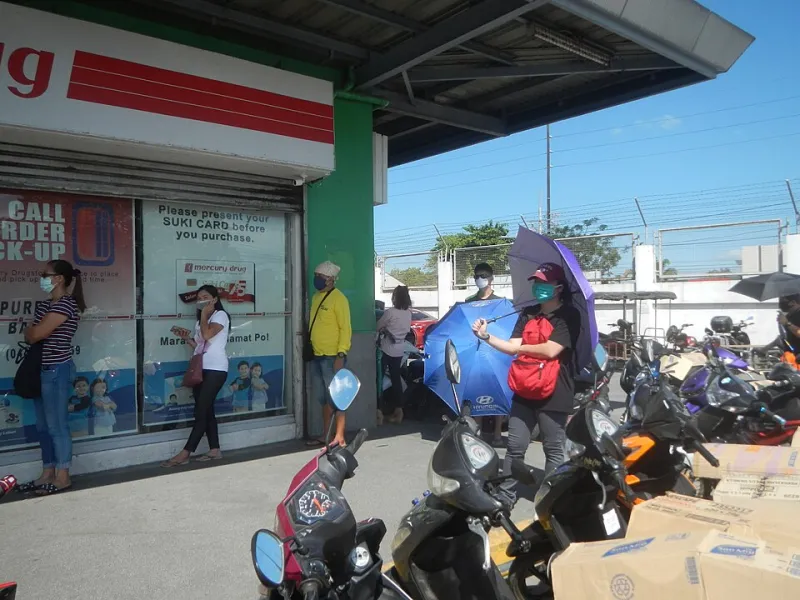
Photo: Judgefloro, CC0, via Wikimedia Commons
There's a particular kind of erasure that happens slowly, almost politely. A neighborhood gets rezoned. A protest gets characterized as a riot in the press. A community meeting gets minutes that don't quite match what anyone remembers being said. By the time anyone thinks to push back, the version with the smooth edges and the institutional letterhead has already taken hold.
That's the gap a loose but growing network of artist-documentarians is trying to close — not after the fact, but in real time, before the sanitizing begins.
The Camera as a Counter-Narrative Machine
Lourdes Reyes has been photographing eviction proceedings in Los Angeles for the better part of four years. She's not a journalist in the traditional sense — she makes no claim to neutrality, and she doesn't want to. "Neutral is a choice," she says. "When you decide not to take a side, you're already taking one. I'm on the side of the people losing their homes."
Her images don't circulate through wire services. They show up in community newsletters, on the walls of legal aid offices, projected at tenant organizing meetings. The point isn't exposure in the mainstream sense. The point is that the people in the photographs have a record — one that belongs to them, that tells the story the way they'd tell it.
This is the witness economy in its rawest form: not documentation as product, but documentation as infrastructure. Something to stand on when you need to prove what happened.
Testimony as Artistic Medium
In Detroit, a collective called Present Tense has been running oral history sessions in neighborhoods facing what city planners euphemistically call "right-sizing" — the process of depopulating blocks deemed too expensive to maintain. What that looks like on the ground is a lot of older residents being quietly pushed toward relocation, their decades of community memory treated as irrelevant to the development conversation.
Present Tense records those conversations. Not to produce a podcast or a documentary film, though some of that has happened. Primarily, the recordings become part of a community archive that residents control. "The city has records about these neighborhoods," says co-founder Marcus Webb. "We wanted the neighborhoods to have records about themselves."
The distinction matters more than it might seem. Official records describe populations as problems to be managed. Community testimony describes people as agents of their own history. One format produces policy. The other produces identity — which turns out to be a lot harder to demolish.
What Gets Lost When Nobody's Looking
The urgency behind this work isn't abstract. Ask anyone who's tried to document a protest in the last decade about the speed at which footage gets contested, decontextualized, or simply disappeared. Ask the families of people killed by police about how long it took for official accounts to diverge from what bystanders saw.
Naomi Okafor, a video artist and community organizer based in Chicago, started her documentation practice after watching a neighborhood mural get painted over within days of a contentious city council vote on a development project. "I realized I had maybe forty-eight hours to photograph anything that existed in that space before it was just gone," she says. "And that if I didn't do it, the mural would be like it never existed."
Her practice has since expanded to what she calls "community forensics" — systematic documentation of public space, infrastructure, and gathering places in neighborhoods under development pressure. She trains residents to do it too. "I'm not trying to be the one with the camera," she says. "I'm trying to make sure there are a hundred cameras."
The Ethics of Witness
None of this is without tension. Documentation carries its own power dynamics. Who holds the archive? Who decides what gets shown and when? What happens when the person being documented and the person doing the documenting don't agree on what the image means?
These are questions the witness economy hasn't fully resolved, and the more honest practitioners will tell you so. Reyes talks about the ongoing negotiation involved in her work — the conversations before and after the photograph, the consent that isn't just a signature but an ongoing relationship. "I'm not extracting anything," she says. "I'm in community with these people. That changes what I owe them."
Present Tense has developed what Webb describes as a community governance model for their archive — a structure where the people who contributed testimony have ongoing say over how it's used. It's slow and sometimes contentious. It also means the archive doesn't get co-opted the moment someone with institutional resources comes along and decides they want access.
When the Record Fights Back
Sometimes the documentation does exactly what it's supposed to do. Footage surfaces. A timeline gets reconstructed. An official account falls apart under the weight of what the witnesses actually saw.
But the practitioners doing this work are careful not to measure success only in those moments. The value of the archive isn't just evidentiary. It's existential. It says: this happened, we were here, we knew what we were living through, and we chose to make it undeniable.
Okafor puts it plainly: "Power counts on people forgetting, or on nobody believing them when they remember. Documentation is how you make forgetting harder."
That's not a small thing. In a political moment defined by competing versions of reality, the act of creating a trustworthy, community-held record of what actually occurred is as radical as almost anything else on offer. It doesn't require a gallery. It doesn't require a grant. It requires showing up, staying present, and refusing to let the moment pass without someone marking it down.
Building the Archive Before the Flood
What's striking about this constellation of practitioners is how deliberately unglamorous most of the work is. There are no viral moments being chased here, no prestige publications being courted. The documentation happens because someone decided the community deserved a record, and then kept showing up to make one.
That consistency — the long-term commitment to a place and its people — is itself a kind of artistic statement. In a culture that rewards novelty and mobility, choosing to stay and watch and record is a form of resistance. It says the story isn't over. It says there are people here worth paying attention to. It says that what happens next will also be documented.
Power, it turns out, doesn't love that. Which is probably the best argument for doing it.