Steal This Archive: The Hacker-Librarians Keeping Culture Alive Against All Odds
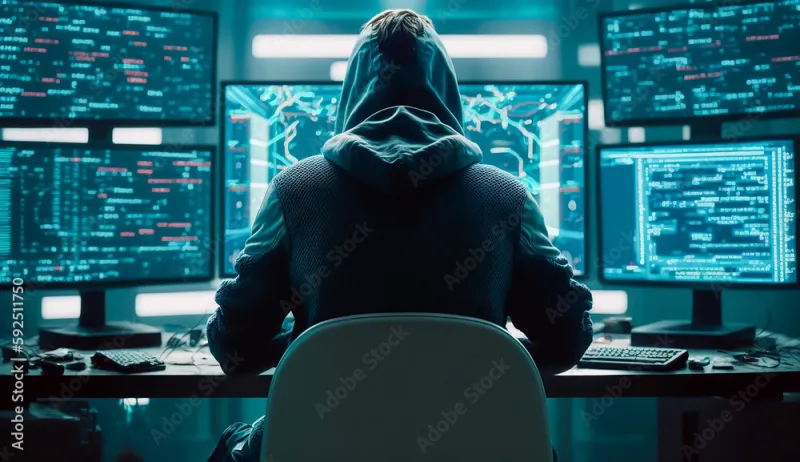
Photo: hacker programmer dark room glowing screen books library archive, via as2.ftcdn.net
Somewhere on a server you'll never locate, a complete run of a mid-century Black literary journal lives. Not a partial scan. Not a microfilm ghost. The whole thing — clean, searchable, free. The university that held the physical copies quietly deaccessioned them in 2019. The digitization project that was supposed to save them lost its grant funding. And the commercial platform that briefly hosted a partial archive went dark when the startup behind it folded.
The copy that survives? Someone took it. Technically, illegally.
This is the world the pirate librarians operate in — a shadow infrastructure of preservation that exists precisely because the official one keeps failing.
When the System Drops the Ball, Someone Else Picks It Up
We tend to think of cultural memory as something institutions handle. Libraries catalog. Museums conserve. Universities digitize. The assumption is that if something matters, someone with a budget and a mandate is taking care of it.
That assumption is increasingly wrong.
Budget cuts shutter special collections. Licensing disputes freeze digital access. Corporate mergers swallow independent archives. Platforms sunset. Hard drives fail. And in each of those gaps, a specific kind of person shows up — someone with technical skills, a moral compass pointed slightly outside the law, and an almost pathological inability to watch things disappear.
Call them hacker-librarians. Pirate archivists. Digital preservationists operating without a 501(c)(3) and without an apology.
They're not a unified movement with a manifesto. They're more like a distributed reflex — people who learned to code and also happened to care deeply about a genre of music, a regional art scene, a body of activist literature, a filmmaker's early work. When they saw those things threatened, they did what they knew how to do: they copied everything, encrypted it, and made sure it couldn't be erased.
The Moral Math of the Digital Vault
Here's the uncomfortable part, and it's worth sitting with: a lot of this work involves bypassing access controls. Scraping behind paywalls. Downloading from restricted institutional repositories. Duplicating collections that are technically owned by entities that haven't made them publicly available and show no signs of doing so.
Under U.S. copyright law — and under the Computer Fraud and Abuse Act, which has been used to prosecute people for far less — this is illegal. Full stop.
But legality and ethics don't always overlap, and the pirate librarian community has spent years building out the philosophical case for what they do. The core argument goes something like this: a cultural artifact that no one can access is, for all practical purposes, already gone. If an institution holds something in a locked digital vault and has no plan to open that vault, the act of copying and redistributing that artifact isn't theft — it's rescue.
The counterargument — that intellectual property rights exist for a reason, that creators and rights-holders deserve control over their work — is real and shouldn't be dismissed. But it gets complicated fast when the rights-holder is a defunct corporation, or when the creator is dead and their estate is indifferent, or when the institution claiming ownership acquired the collection under circumstances that were themselves ethically murky.
These are not clean situations. The people doing this work know that.
Specific Operations, Specific Stakes
The most visible example most people know is Sci-Hub — the academic paper repository founded by Alexandra Elbakyan that has made tens of millions of research articles freely available, despite multiple court judgments against it. Sci-Hub operates openly and defiantly, and it has become something close to essential infrastructure for researchers at institutions that can't afford journal subscriptions — which is most institutions outside a handful of well-endowed American universities.
But Sci-Hub is the tip of something much larger and less visible.
There are communities dedicated specifically to preserving video game history — not just popular titles, but regional releases, indie experiments, and console-specific software that exists on physical media currently rotting in attics. These groups rip, document, and distribute ROMs at a scale that dwarfs anything the official game preservation world has managed.
There are networks focused on deaccessioned art catalogs — the exhibition documentation, the artist statements, the correspondence that museums throw away when they sell off collections or close departments. People intercept this material, sometimes literally pulling it from dumpsters, sometimes copying it from institutional servers before access is revoked.
There are operations specifically targeting the cultural production of marginalized communities — zines, underground newspapers, community radio recordings, oral history projects — that were never going to be prioritized by mainstream archives and are actively disappearing as the people who made them age and die.
None of these groups advertise. Most communicate through encrypted channels. Many use pseudonyms. The work happens in the background, unglamorous and legally precarious, sustained by a shared conviction that the alternative — letting this stuff vanish — is worse than the risk.
What Gets Lost When We Wait for Permission
There's a version of the preservation argument that tries to stay fully within the law — advocating for copyright reform, lobbying for expanded fair use, pushing institutions to digitize and open their collections voluntarily. These are real and necessary efforts.
But they operate on a timeline that doesn't match the rate of loss. Copyright terms in the U.S. are extraordinarily long. Institutional digitization projects move slowly and underfund preservation of material that isn't already considered prestigious. The communities whose cultural production is most at risk — Black, Indigenous, queer, immigrant, working-class — are least likely to have their archives treated as urgent by the institutions that theoretically serve them.
The pirate librarians aren't waiting. They're working on the assumption that if something isn't copied now, it won't exist later, and that a future in which people can access their own cultural history is worth the legal exposure.
Whether you agree with that calculus probably depends on how much you trust institutions to do the right thing if you just give them enough time. Based on the evidence, a lot of people have stopped waiting to find out.
The Question This Work Forces
There's no clean resolution here. The hacker-librarians exist in genuine moral gray zone — not the romanticized kind where the answer is obvious once you look closely enough, but the real kind where legitimate values actually conflict.
What's clear is that something is being preserved that wouldn't otherwise survive. What's also clear is that the legal framework governing digital access was not designed with preservation as a priority. And what's perhaps clearest of all is that the communities most invested in keeping this material alive are the same ones who've historically had the least power to change the rules.
So the work continues. Quietly. In encrypted channels. On servers you'll never find.
And somewhere in that distributed, technically illegal, morally serious infrastructure, a complete run of a mid-century Black literary journal keeps existing — because someone decided that keeping it was more important than asking permission first.