Lying as a Love Language: The Artists Who Weaponize Fiction to Tell the Truth
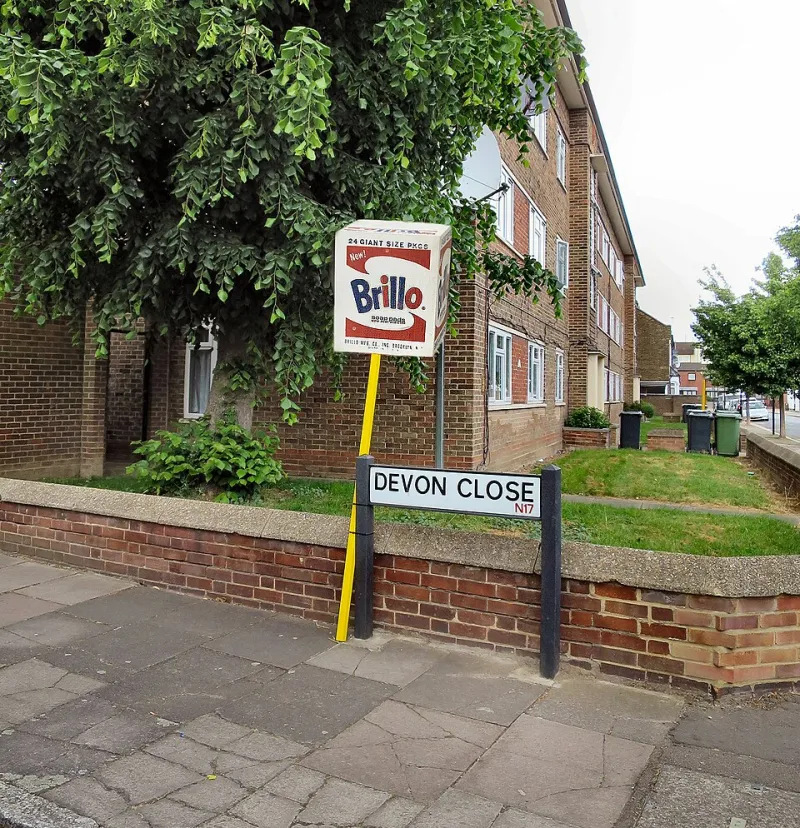
Photo: Alan Stanton, CC BY-SA 2.0, via Wikimedia Commons
Here's a question worth sitting with: what do you do when the official story is the lie?
Not a small lie. Not a rounding error or a misquote. The kind of foundational, load-bearing lie that holds up entire institutions — the kind baked into textbooks, museum plaques, and government press releases. The kind that gets repeated so many times it calcifies into fact.
A growing number of artists, writers, and cultural provocateurs have a pretty clear answer: you lie back. Harder. Smarter. With more footnotes.
The Forgery as Political Act
Let's be upfront about what we're talking about. This isn't accidental misinformation or sloppy sourcing. These are deliberate, often elaborate fabrications — fake archival documents, invented oral histories, fictional government agencies, counterfeit corporate press releases — designed to do something that straightforward protest rarely manages: make you question everything you thought you already knew.
The tradition is older than most people realize. In the 1960s and '70s, the Yes Men's spiritual ancestors were already flooding media channels with absurdist impersonations of power. Joey Skaggs spent decades running what he called "capers" — fake businesses, fake medical studies, fake news stories — that got picked up by legitimate outlets before he revealed the hoax. The point was never to deceive permanently. The point was the moment of recognition. That gut-drop when you realize you believed it.
That moment is the work.
When the Archive Lies First
What's shifted in the current wave of this practice is the urgency. Artists working today aren't just poking fun at credulous journalists. They're responding to a specific, documented crisis: the archive itself has always been a political instrument, and it has always lied about whose stories count.
Take the proliferation of community-based counter-archiving projects across the US — groups in cities like Detroit, New Orleans, and the South Bronx who are creating what some call "speculative histories." These aren't corrections to the historical record so much as parallel records, built with the same visual and bureaucratic language as official documents but telling entirely different stories. Stories of neighborhoods that were redlined out of prosperity. Of water systems that were deliberately poisoned. Of cultural movements that were surveilled into silence.
The question these projects ask isn't "did this happen?" The question is: "Why does it only count as history when it's written on the right kind of paper?"
The Fake Press Release That Told the Truth
In 2004, the Yes Men pulled off one of the most audacious examples of this mode: posing as Dow Chemical representatives on the twentieth anniversary of the Bhopal disaster, they appeared on BBC World News and announced that Dow would fully compensate the victims — something Dow had refused to do for two decades. The stock dropped. The retraction came. But for a few hours, hundreds of thousands of people believed that a corporation had been held accountable.
The hoax didn't change Dow's behavior. But it changed the conversation in a way that a protest sign never could. It made the absence of accountability visible by briefly, fictionally, filling it.
That's the mechanism at the heart of this whole practice. You don't reveal the lie by stating the truth. You reveal it by out-lying the liars.
Marginalized Narratives and the Permission Problem
There's a deeper political dimension here that's easy to miss if you're focused on the spectacle of the hoax itself. For communities whose histories have been systematically excluded from official records, the very concept of "legitimate documentation" is already a loaded one.
Indigenous artists, Black scholars, queer historians — they've been told for generations that their accounts are anecdotal, that their memories are unreliable, that their community knowledge doesn't meet the evidentiary standards of serious inquiry. The institutional apparatus that decides what counts as truth has never been neutral. It has always served particular interests.
So when an artist constructs an elaborate fake history of a Black neighborhood in Chicago that was erased by urban renewal, complete with forged city planning documents and invented oral testimonies, the fiction isn't a distortion of reality. In many ways, it's closer to the actual texture of that community's experience than any sanitized municipal record.
The fake document tells the truth about what was stolen. The real document lies about why.
The Risk You Have to Reckon With
None of this is without tension, and it would be intellectually dishonest to pretend otherwise. We're living in a moment when misinformation is genuinely destroying lives — when fake health claims are killing people, when fabricated evidence is being used to justify political violence. The idea of celebrating strategic falsehood requires some careful navigation.
The artists working in this space tend to be pretty deliberate about the difference between their work and bad-faith disinformation. The reveal matters. The context matters. A hoax that never gets disclosed is just a lie. A forgery that circulates without critique can do real damage.
But there's also something worth pushing back on in the demand that artists always play by the rules of evidence that institutions themselves routinely violate. The burden of proof has never been applied evenly. Official lies rarely come with disclaimers.
What Gets Unlocked
What these artists are really doing — underneath the craft of the fake document, the impersonation, the invented archive — is performing a kind of epistemological jailbreak. They're demonstrating that the gatekeeping function of "credibility" is itself a power structure, and that structure can be hacked.
When you encounter a convincing fake and then learn it's a fake, something shifts. You start asking: how did I decide to believe that? What signals did I use? Who taught me those signals, and why? That's not a comfortable place to sit. It's also exactly where critical thinking lives.
The unreliable narrator, as a literary device, has always been a tool for getting at truths that reliable narration can't reach. Artists are just applying that logic to the broader cultural record — the one we mistake for neutral ground.
The Work Continues
Somewhere right now, someone is designing a fake government report with real-looking letterhead. Someone is building a fictional company website for a corporation that doesn't exist but absolutely should be held responsible for something that does. Someone is writing an oral history of a community whose actual oral history was never recorded because no one with a grant thought it mattered.
They're lying. But they're not wrong.
And in the gap between those two things — between the lie and the wrongness — that's where the real story lives.