Shelving the System: Meet the Rogue Archivists Rewiring How Knowledge Moves Online
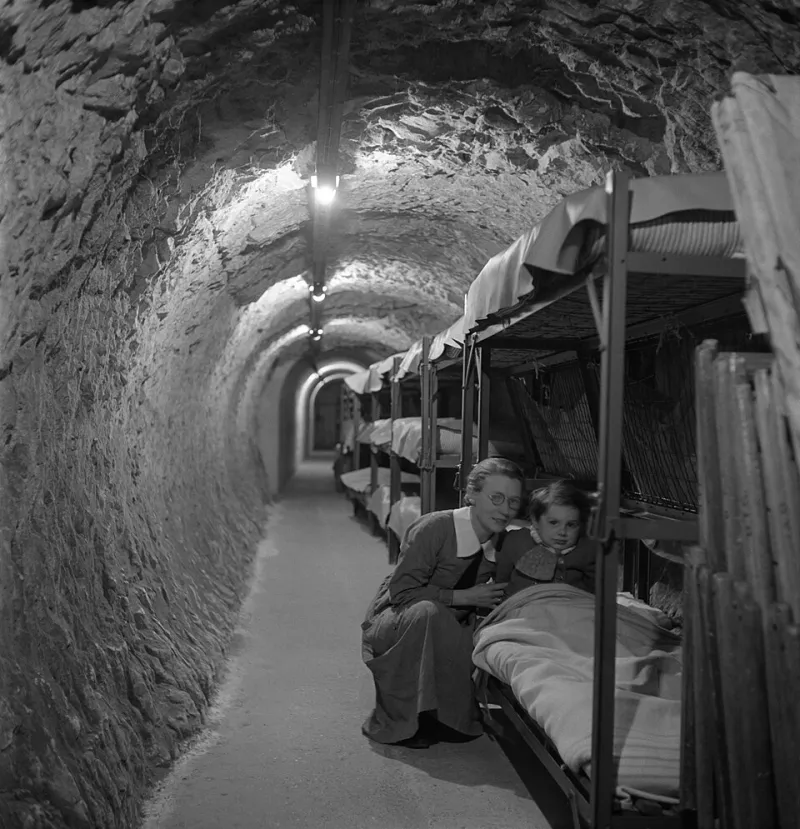
Photo: Toni Frissell, Public domain, via Wikimedia Commons
Somewhere on the internet right now, a server is humming in somebody's basement. On it: tens of thousands of academic papers, out-of-print textbooks, zines from the 1980s, court documents, oral histories, and a complete run of a defunct community newspaper from rural Mississippi. The person who built it doesn't work for Google. They don't work for a university. They work a day job, probably something unrelated, and they do this in the hours between dinner and sleep because they believe — genuinely, stubbornly believe — that knowledge kept behind a paywall is knowledge being held hostage.
This is the world of the underground digital archive. And it's bigger, more organized, and more philosophically coherent than most people realize.
What We Talk About When We Talk About Access
Here's the thing about information infrastructure in America: most of it is owned by somebody who wants something from you. The big academic publishers — Elsevier, Springer, Wiley — charge institutions anywhere from a few thousand to millions of dollars annually for journal access. If you're not affiliated with a university, a single research paper can run you $40. A textbook that costs $300 new is often the only legal way to access foundational knowledge in a given field.
The internet was supposed to fix this. It didn't. What it did instead was create new enclosures — paywalls, login walls, geoblocks — that mirror the old ones pretty faithfully. The dream of universal access got quietly rerouted into subscription models.
The people building parallel systems are responding to that rerouting. They're not nostalgic for some golden age of the open web. They're pragmatic. The tools exist to do something different, so they're doing it.
The Tools Are Weirder Than You Think
The technical architecture of these networks is genuinely interesting, and it's worth spending a minute on it because the form reflects the philosophy.
Some projects use IPFS — the InterPlanetary File System — which distributes files across a peer-to-peer network rather than storing them on a single server. There's no central point of failure, no single organization that can be pressured into taking something down. Others run on Tor, routing traffic through layered encryption so that neither the host nor the user is easily identifiable. Some are just good old-fashioned torrents, a technology that's been keeping decentralized file-sharing alive for decades and still works fine.
What's changed recently is the organizational layer on top of these tools. People aren't just dumping files into the void anymore. They're building metadata systems, tagging conventions, community moderation structures. Some projects have developed their own search interfaces. Others integrate with existing tools like Zotero, the open-source citation manager, so that researchers can pull directly from underground archives into their workflows without even thinking about it.
The infrastructure is maturing. It's starting to look less like a pirate bay and more like a library — which is, not coincidentally, exactly what its builders are going for.
The Librarian as Radical Figure
It's worth pausing on the word "librarian" here, because the people doing this work often claim it deliberately. The American Library Association has historically been one of the most principled defenders of intellectual freedom in the country — fighting censorship, pushing for open access, resisting surveillance requests from law enforcement. Real librarians have always occupied a slightly subversive position in American civic life.
The underground archivists are extending that tradition into territory that professional librarians often can't legally go. They're building what one organizer, speaking anonymously, called "the library that the library wishes it could be."
That framing matters. It situates the work not as theft but as service — a continuation of a public good that the market has been allowed to erode. When Sci-Hub, the most famous of these projects, was sued by academic publishers, its founder Alexandra Elbakyan framed the case in explicitly human-rights terms: access to scientific knowledge is a right, not a commodity. That argument didn't save her from the lawsuit. But it resonated with a lot of people who had never thought about academic publishing in their lives.
Grassroots Organizing Meets Digital Infrastructure
What's less visible — and maybe more interesting — is the organizing that happens around the technical work. These aren't just solo hackers. They're communities with internal debates, governance structures, and ongoing arguments about scope and ethics.
Who decides what gets archived? How do you handle material that's politically sensitive, or that might put a community at risk if surfaced? What about indigenous knowledge that communities have explicitly asked not to be digitized and distributed? These aren't hypothetical questions. They come up constantly, and the answers different groups arrive at reveal a lot about their underlying values.
Some projects operate on a strict "if it's been published, it belongs to everyone" model. Others are more contextual, trying to honor the intent of creators even when that intent wasn't legally formalized. A few have developed formal community consent processes for specific collections.
The disagreements are real, and they're productive. They're the kind of arguments that suggest a genuine political project rather than just a technical one.
What This Has to Do With Art
Here's the connection that doesn't always get made explicit: a huge portion of what these archives are preserving is cultural work. Art books, exhibition catalogs, film theory journals, music zines, photography archives. The stuff that doesn't make it into university libraries because it was never considered serious enough, or because the institutions that produced it folded before anyone thought to preserve their records.
For artists and cultural workers, this matters in a specific way. The history of experimental and marginal art practices is constantly at risk of disappearing — not because anyone is actively trying to suppress it, but because no one with institutional resources has decided it's worth saving. The underground archivists are filling that gap, often with a lot more care and specificity than a formal institution would bring to the work.
There's also something formally interesting about the parallel between archival practice and certain strands of contemporary art. Both are, at their core, about making decisions about what gets kept, what gets surfaced, what gets framed as significant. An archive is an argument. So is an exhibition.
The Long Game
None of this is without risk. Legal exposure is real. The platforms that host some of this work get taken down, sometimes permanently. People who build these systems often do so knowing that they're operating in legally gray territory, and that the consequences of getting it wrong can be serious.
But the projects keep appearing. For every one that gets shut down, others start. The knowledge spreads — not just the files themselves, but the techniques, the tools, the organizational models. People learn how to do this and then teach other people. The infrastructure gets more distributed, more resilient, harder to kill.
That's the bet these archivists are making: that if enough people build enough parallel systems, the question of who controls knowledge starts to have a different answer. Not a corporate one. Not a governmental one. Something messier and more democratic and harder to own.
It's a long game. But then, libraries always were.