Ink Over the Cloud: Why Artists Are Printing Their Way Out of the Delete Button
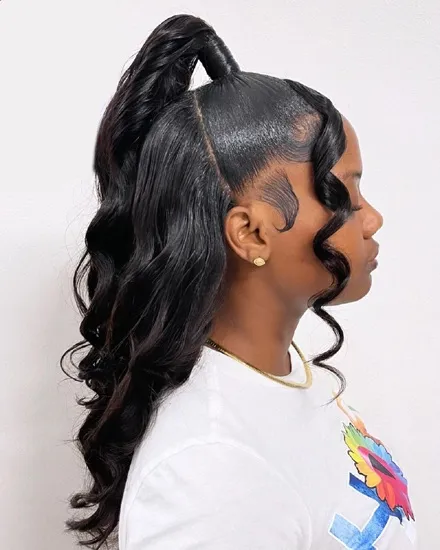
Photo: artist printing zines risograph press physical books studio, via stylesatlife.com
Somewhere in a rented studio in East Oakland, a printmaker named Deja is feeding sheets of cardstock through a Risograph machine at two in the morning. The image coming out the other side is a piece she originally made as a series of digital illustrations — posted, promoted, and eventually quietly shadowbanned on a platform she'd spent three years building an audience on. Tonight, she's making 200 copies. Nobody can shadowban paper.
"The cloud felt safe until it didn't," she says, not looking up from the feeder. "Now I want something I can hand to a stranger on the street and know it exists."
She's not alone. Across the country, artists are doing something that looks, on the surface, like a step backward: they're printing things. Binding things. Mailing things in envelopes. Stacking things in independent bookstores and leaving them on community center tables. What reads as retro is actually one of the more sophisticated preservation strategies happening in American art right now — a deliberate, collective pivot away from platforms that can evict you without warning and toward physical objects that simply persist.
The Delete Button Has a Corporate Address
The anxiety driving all this ink isn't abstract. In 2023 alone, multiple platforms either shut down entirely, radically altered their content moderation policies, or quietly buried creators whose work didn't perform for advertisers. Years of video essays, illustration portfolios, sound archives, and community-built threads vanished or became effectively invisible. Artists who had structured entire practices around these platforms — who had, in many cases, been encouraged by those same platforms to do exactly that — found themselves starting over.
For artists whose work touches on race, queerness, disability, or political dissent, the exposure was even sharper. Content moderation doesn't operate neutrally, and the bodies of work most at risk of removal tend to belong to the creators who can least afford to lose them.
Philadelphia-based zine-maker and organizer Tomás Reyes has been thinking about this for years. His project, Tierra Firme Press, started as a side operation to his digital work. Now it's the main event. "I watched people I admire lose everything to a terms-of-service update," he says. "I decided I didn't want to be a tenant anymore. I wanted to own the walls."
Paper as Political Infrastructure
What's interesting about this movement — and it is a movement, even if nobody's written a manifesto yet — is that it reframes the physical object not as a fetish item or a luxury good, but as infrastructure. The zine isn't cute. It's load-bearing.
That distinction matters. There's a long history in American activism of using print as a tool specifically because it's decentralized, cheap to reproduce, and hard to suppress at scale. The civil rights movement ran on mimeographed flyers. The feminist health movement published its own books when mainstream publishers wouldn't. ACT UP plastered cities with graphics that no algorithm could throttle. The current wave of artists printing their digital work is drawing on that lineage, consciously or not.
In Chicago, a collective called Groundwork Editions has started a program where digital artists submit work to be printed and distributed through a network of mutual aid hubs, barbershops, and independent laundromats across the South Side. The work doesn't live on a website. It lives in the neighborhood.
"We're not anti-internet," says one of the collective's organizers, who asked to be identified only as Priya. "We're anti-dependence. There's a difference. We want the work to be able to survive without a server."
The Aesthetics of Durability
There's also something happening at the level of craft that's worth paying attention to. When artists commit to making physical objects, the decisions become different. You think about paper weight and ink coverage. You think about how a binding will hold up after fifty people have opened it. You think about whether the thing you're making will be readable in ten years without a software update.
Those constraints produce different art. Not better or worse, but different — work shaped by the logic of endurance rather than the logic of engagement metrics.
Deja's Risograph prints have a texture and a warmth that her digital originals don't. She's not trying to replicate the screen experience. She's making something new from the same source material. "Printing it changes it," she says. "And that's fine. The print is its own thing now. It has a life the digital version doesn't."
In New York, sculptor and bookmaker Amara Osei has been experimenting with embedding digital work into sculptural objects — small hand-cast resin forms with printed inserts sealed inside, designed to be opened or not opened, kept or given away. "I'm interested in objects that carry information the way seeds carry genetic material," she explains. "Dense, portable, designed to survive conditions you can't predict."
That language — seeds, survival, conditions you can't predict — keeps coming up in conversations with artists working this way. There's an ecological frame underneath the aesthetic one. The physical object as organism, adapted for resilience.
Distribution as the Work
One of the more radical implications of this shift is what it does to the idea of distribution itself. On a platform, distribution is something that happens to your work — algorithmically, invisibly, according to logic you don't control. In the print world, distribution is something you do. It's a practice. It's a relationship.
Tomás drives his zines to community spaces himself. He knows who has them. He has conversations about them. When someone can't pay, they get one anyway. "Distribution is the politics," he says. "Who has it, who doesn't, how it got there — that's the whole argument."
Groundwork Editions tracks where their prints end up, not through analytics, but through a low-tech check-in system — a postcard people can mail back if they want to. Some do. The collective has a physical map on their studio wall with pins showing where the work has traveled. It looks nothing like a dashboard. It looks like a community.
Not a Rejection of the Digital — A Hedge Against Its Fragility
Nobody in this conversation is arguing that digital tools are worthless or that artists should abandon them entirely. The point isn't purity. The point is redundancy — building practices that don't collapse if one pillar gets knocked out.
And in a moment when the platforms that once promised permanence are consolidating, monetizing, and moderating in increasingly unpredictable ways, having a physical body of work that exists outside those systems isn't backward-looking. It's just smart.
Deja finishes her print run a little after three. She stacks the sheets carefully, rubber-bands them into groups of twenty-five. Tomorrow she'll cut and fold them. Next week, she'll have 200 copies of something that belongs entirely to her — that she can give away, sell, trade, or leave somewhere for a stranger to find.
No algorithm decides who sees it. No terms-of-service update can touch it. The paper doesn't care about engagement rates.
It just holds the ink and keeps going.