Critics Who Actually Make Things: How Working Artists Are Rewriting the Rules of Art Discourse
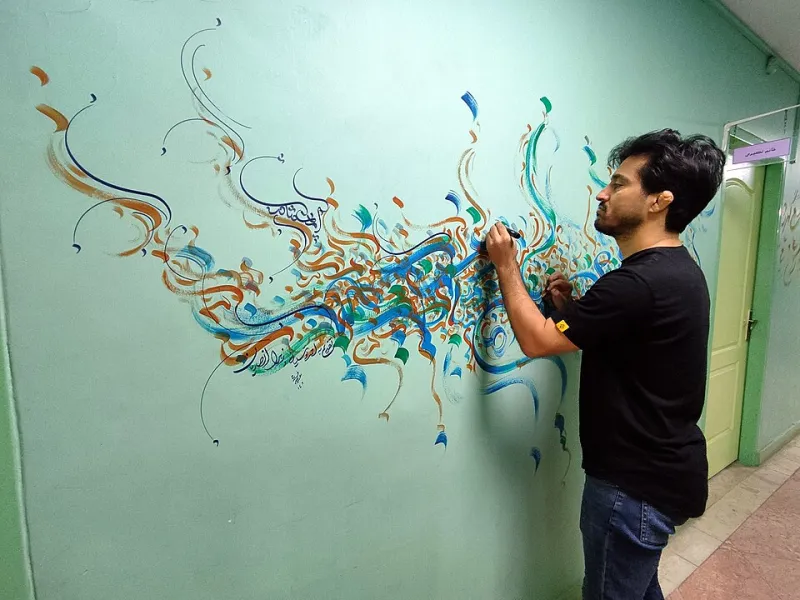
Photo: Telepe2001, CC BY 4.0, via Wikimedia Commons
There's a particular kind of frustration that builds when you read a review of your own work — or your community's work — written by someone who has never held a brush, stretched a canvas, coded a generative piece, or spent a Tuesday night arguing about color theory over cheap wine in somebody's converted garage. The review might be technically accurate. It might even be generous. But something is missing. Some essential understanding of what the work is doing is just... not there.
That frustration has been quietly building for a long time. And lately, working artists across the US have stopped waiting for critics to catch up.
The Zine Is Back, and It's Doing Theory Now
Print has never really died in activist and art communities — it just got ignored by people who thought the internet replaced everything. But the zine resurgence happening right now isn't your older sibling's cut-and-paste punk ephemera. Artists are using self-published print to do actual critical heavy lifting.
Small runs, distributed at openings and through the mail, are functioning as aesthetic manifestos. A painter in Philadelphia publishes a quarterly that reads like a cross between a field notebook and a philosophy seminar. A collective in Oakland puts out something that looks like a grocery circular but contains some of the sharpest writing on Black abstraction currently in circulation. These aren't hobbyist projects. They're frameworks. They're building the vocabulary that a lot of gallery writing still doesn't have.
What makes them different from traditional criticism isn't just the format — it's the positionality. The writers are inside the work. They know what a particular material costs, what it means to choose it anyway, what the conversation in the studio looked like before the piece existed. That knowledge changes what gets asked.
Podcasts as Pedagogy
If zines are where artists go to think slowly, podcasts are where they go to think out loud. And the range of what's happening in artist-run audio right now is genuinely remarkable.
Some shows are structured like criticism — close readings of specific works, conversations about movements, historical deep dives. Others function more like oral histories or community radio, pulling in voices that mainstream art media has never bothered to call. A ceramicist in Detroit runs a show that's ostensibly about craft but ends up being a sustained meditation on labor and value. A duo in Chicago records long, unedited conversations about what it means to make work in a city that's actively being gentrified around them.
What these shows share is a willingness to let the conversation get complicated. Commercial art media tends to resolve its tensions — to arrive at a verdict, a recommendation, a clean takeaway. Artist-run podcasts often don't. They sit in the mess. That's not a failure of rigor; it's a different kind of rigor entirely.
Social Channels as Critical Infrastructure
Yes, the platforms are terrible. Yes, the algorithm is designed to flatten nuance and reward the loudest signal. And yes, artists are using them anyway — strategically, critically, sometimes brilliantly.
The Instagram essay has become a real genre. Artists writing long-form captions that function as criticism, theory, or polemic — using the slide format to build arguments that would feel at home in an academic journal, except they're getting read by people who would never open one. A muralist in Los Angeles has built a following not by posting finished work but by documenting the thinking: the references, the rejected ideas, the conversations that shaped the final piece. It's criticism from the inside, in real time.
Twitter/X — despite everything — still hosts some of the sharpest rapid-fire art discourse happening anywhere. The conversations are chaotic and often hostile, but they're also genuinely generative. Ideas get tested fast. Bad arguments get dismantled fast. And the people doing the testing are often practitioners who can spot a theoretical gap from a mile away because they've fallen into that gap themselves.
What Gets Centered When Practitioners Lead
Here's where it gets interesting — and a little uncomfortable. When working artists control the critical conversation, certain things shift.
Process gets taken seriously in a way it often doesn't in traditional criticism. The how of making becomes as legible as the what. Questions about material, about labor, about the actual conditions under which work gets produced — these aren't treated as biographical footnotes. They're central.
Community and context get centered, too. Artist-run criticism tends to be deeply embedded in specific places and specific scenes. It knows its neighbors. That local knowledge produces a kind of specificity that national art media, with its tendency toward universalizing, often can't match.
And voices that have been systematically excluded from credentialed criticism — artists of color, disabled artists, working-class artists, artists outside the coastal gallery circuits — show up differently in these spaces. Not as subjects of coverage, but as the people setting the terms.
What Gets Lost (And Whether That's Okay)
It would be dishonest to pretend this shift is all upside. When practitioners run the discourse, certain blind spots come with the territory.
The insider perspective that makes artist-run criticism so vivid can also make it insular. Communities talk to themselves. Assumptions go unexamined. The work of a tight-knit scene can get overvalued simply because everyone in the room loves everyone else in the room.
There's also a question of accountability. Traditional criticism, for all its failures, operates within a set of professional norms — fact-checking, editorial oversight, at least a nominal commitment to transparency. Artist-run criticism operates on trust and reputation, which works until it doesn't.
None of this means the project isn't worth pursuing. It means it's complicated, which is exactly what you'd expect from something genuinely new.
The Curriculum Nobody Assigned
What's being built here, piece by piece, zine by zine, episode by episode, is something that looks a lot like an alternative education in how to see and how to think about seeing. It's not a formal curriculum. There's no syllabus, no required reading list, no credential at the end. But it's rigorous in its own way — tested against the reality of making, accountable to communities rather than institutions, and growing fast.
The art world has always had an official story about itself. What's different now is that the people who actually make the art are writing their own version — and a lot of people are finding it more useful than the one they were handed.
That's not a small thing. That might actually be everything.