The Name Is Not the Person: How Artists Are Using False Identities as a Creative Superpower
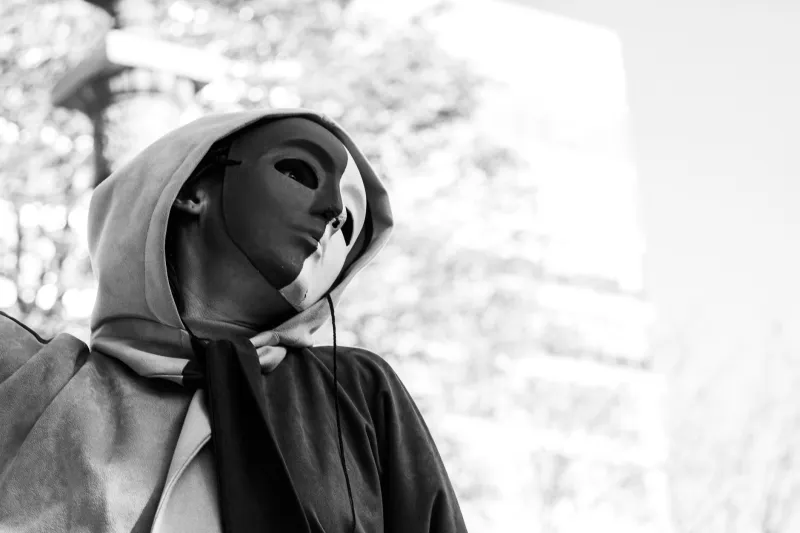
There's a person somewhere in the Pacific Northwest who has published three novels, two chapbooks, and a sprawling body of visual art — all under names that belong to other people, dead people, and in one case, a name that was generated by a random Victorian census record generator. They have no Instagram. No author bio. No headshot. And somehow, the work keeps finding readers.
This isn't an isolated case. Across the US, a loose, largely uncoordinated wave of artists is doing something that cuts directly against everything the attention economy demands: they're disappearing into their work by multiplying or erasing the name attached to it.
The Myth of the Individual Creator Has Always Been a Lie
Let's start with the obvious thing nobody wants to say out loud. The idea that art comes from a single, traceable, brandable human being is not some ancient truth. It's a market mechanism. The art world — and by extension the publishing industry, the music industry, the gallery system — needs a face to sell. A name to search. A biography to package alongside the work so the work feels personal, intimate, purchasable.
Before that machinery existed, anonymity was the norm. Medieval craftspeople didn't sign their cathedral windows. Blues musicians passed songs around like tools. Folk traditions operated on a logic of collective inheritance rather than individual ownership. The signature is a modern invention, and it has always served commerce more than creativity.
Some artists working today are simply refusing to forget that.
Dead Names, Borrowed Voices
One strategy that keeps coming up is publishing under the name of a historical figure — someone long dead, whose identity exists in the public domain and carries cultural weight without carrying a personal brand.
A visual artist in Chicago has been releasing zines under the name of a 19th-century abolitionist organizer. The choice isn't random. The work deals explicitly with labor rights and racial justice, and the borrowed name functions as a kind of curatorial frame — it tells you something about the lineage the artist is claiming without reducing the work to an autobiography. The artist has said, in the one interview they gave under their legal name, that they wanted the work to feel like it came from a tradition rather than a person. "I didn't want it to be about me," they said. "I wanted it to be about the argument."
That distinction — between personal expression and collective argument — is doing a lot of work in these practices.
Algorithmic Camouflage
There's also something very practical happening here, and it's worth naming directly: publishing under a pseudonym or a collective name makes you extremely difficult to track.
The recommendation engines that govern what gets seen online are optimized for consistency. They want to know what you make, who you are, what your audience demographic looks like, and how to serve you more of yourself. An artist who publishes under five different names, or who releases work under a collective alias that dozens of people contribute to, breaks that feedback loop entirely.
This is not accidental. Several artists interviewed for this piece described the choice to fragment their public identity as a deliberate act of resistance against algorithmic categorization. One musician in Brooklyn who releases music under at least four different monikers described it as "making myself unsearchable on purpose." The goal isn't obscurity for its own sake — it's the freedom that comes from not being pre-sorted before the audience even encounters the work.
When you're not a brand, the work can't be consumed as a brand extension. It has to be encountered on its own terms.
Collective Names as Political Form
Some of the most interesting examples aren't about individual artists hiding — they're about groups of artists merging into a single fictional author.
The practice has deep roots. The Guerrilla Girls published under a collective pseudonym for decades. The Yes Men operated under assumed corporate identities. The Luther Blissett project in the 1990s invited anyone to publish under that shared name, turning authorship itself into a kind of open-source commons. What those projects understood — and what contemporary artists are rediscovering — is that a collective name is a political statement about who gets credit, who gets visibility, and who the art actually belongs to.
A collective in Philadelphia has been releasing community-based murals and public installations under a single shared name for the past four years. None of the individual members publicize their involvement. The collective name belongs to everyone who has ever contributed, including people who have since left the city, people who were involved for a single afternoon, and in a few cases, community members who suggested an idea that ended up shaping the whole project. "Authorship is a form of debt collection," one member told us. "We're not interested in collecting."
What Gets Lost, What Gets Found
It would be dishonest to pretend there's no cost to this. Artists who publish under pseudonyms often can't apply for grants, can't build a career in the conventional sense, can't leverage their work for professional opportunities. In a culture where your name is your resume, choosing not to have a legible name means opting out of a lot of systems that distribute resources.
Some artists make that trade consciously. Others find workarounds — maintaining a legal identity for institutional purposes while reserving the pseudonym for the work that matters most to them. And some simply accept the financial precarity as part of the practice, understanding that the freedom they're buying with that sacrifice is real.
What they tend to gain is harder to quantify. Work that doesn't carry the weight of a personal brand can take risks that branded work can't. It can fail without consequence. It can contradict itself across projects. It can belong to a tradition rather than a portfolio.
The Name Was Never the Point
There's something clarifying about watching artists deliberately dismantle the apparatus of individual recognition. It forces a question that the art world usually works very hard to suppress: what is the work actually for?
If it's for the artist's career, the name matters enormously. If it's for the audience, for the culture, for the argument the work is trying to make — the name is just logistics.
The artists publishing under dead names and borrowed identities have already answered that question for themselves. The rest of us might want to sit with it a little longer.