Don't Wait for the Green Light: How Unsanctioned Art Is Changing What Gets Made
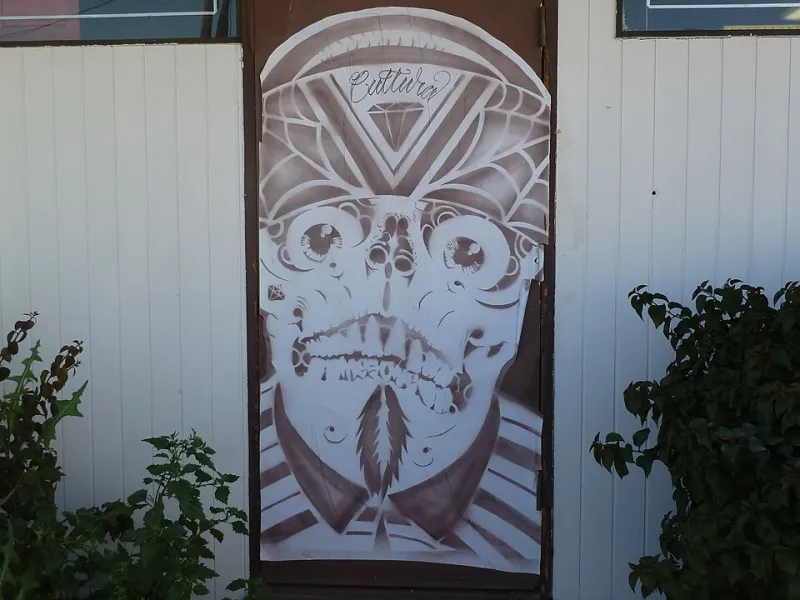
Photo: Chris English, CC BY-SA 3.0, via Wikimedia Commons
Here's something nobody in the arts funding world likes to say out loud: the application process selects for a very specific kind of person. Someone with time, institutional access, professional references, and the ability to describe what they're going to make before they've made it. That person is often not the person with the most urgent thing to say.
A lot of artists have figured this out. And a growing number of them have decided to stop waiting.
The Permission Economy
The traditional pathway for serious art in America looks something like this: school, residency, grant application, group show, solo show, critical attention, institutional collection, legacy. Each step requires the approval of the previous gatekeepers. You need someone to vouch for you to get in the room, and you need to be in the room to get vouched for.
This isn't a conspiracy. It's just how systems calcify over time. The people making decisions at foundations and museums and publications are generally trying to do good work. But they're also operating inside structures that were built by and for a narrow slice of the cultural population—and structures have gravity.
What's shifted in the last decade, and accelerated dramatically since 2020, is that a critical mass of artists have stopped trying to fit themselves into that pipeline. Not because they gave up, but because they found something more interesting on the other side of it.
Just Start
The most common characteristic of permission-free art projects isn't a particular aesthetic or medium. It's a bias toward action. You don't pitch it. You don't wait for the funding to come through. You make the thing, or you organize the thing, or you open the space—and you figure out the rest as you go.
In Chicago, the mutual aid art network Chances Dances spent years throwing queer dance parties in whatever space would have them before anyone was calling it a cultural institution. It was never framed as an art project. It was just a thing people needed that didn't exist, so they built it. The institutional recognition came later, if at all, and by then it didn't really matter.
In Los Angeles, a loose collective called the Underground Museum—founded by the late Noah Davis in a strip mall in Arlington Heights—became one of the most talked-about art spaces in the country without following a single conventional step. Davis didn't wait for a building grant. He took over a commercial storefront and started putting up shows. The work was serious. The space was real. The permission never came because he never asked for it.
What You Give Up (And What You Get)
Let's be honest about the trade-offs, because there are real ones. Operating outside institutional channels means operating without institutional resources. No health insurance through your artist residency. No publicist. No built-in audience. No credentialing that makes it easier to get the next thing off the ground.
For artists from communities that have historically been excluded from those resources, the calculus is complicated. Some argue that opting out of the permission system is a luxury that only people with safety nets can afford—that the real fight is getting institutions to open up, not building around them.
That tension is real and it doesn't resolve cleanly. But what's also true is that the permission system has its own costs. The time and energy that go into grant applications, board presentations, and institutional relationship management are enormous. And the work that comes out of that process is often—not always, but often—shaped by what the funders want to see, whether the artist consciously intends that or not.
The artists who've stepped outside that system talk about a different kind of freedom. Not freedom from constraints—every project has constraints—but freedom from the specific constraint of having to justify your instincts to someone who doesn't share them.
Organizing Without a Mandate
This dynamic isn't limited to individual artists. It's showing up in how cultural organizers are structuring their work too.
The zine renaissance of the last few years is partly about this. A zine doesn't need a publisher or a distributor or a review in the Times. It needs someone with something to say and access to a photocopier. The form is deliberately low-stakes and high-velocity—you can make one in a weekend and have it in people's hands the following week. The feedback loop is immediate and human-scale.
Similarly, the explosion of pop-up galleries, apartment shows, and parking lot exhibitions in cities across the US reflects a generation of curators and organizers who've stopped waiting for institutional space to become available. They're building temporary architectures of attention—here for a weekend, gone on Monday, but real while they lasted.
What these approaches share is an implicit argument: the work doesn't need to be permanent to matter. It doesn't need to be validated to be valid.
The Critic Is Optional
One of the stranger side effects of permission-free art culture is a recalibration of how critical attention functions. If you never pitched to the major publications, you're not waiting for their review. If your audience found you through word of mouth or social media or a flyer stapled to a telephone pole, their opinion of the work is direct and unmediated.
That's not anti-intellectualism. A lot of the most rigorous critical conversations happening right now are taking place in Discord servers and group chats and self-published newsletters, not in the pages of Artforum. The infrastructure of criticism is dispersing the same way the infrastructure of making is.
What it means is that the question "does this matter?" is increasingly being answered by the people the work is actually for—not by a credentialing body that may or may not share their concerns.
The O in Ongoing
None of this is a tidy revolution. Institutions still have resources that matter. Critics still shape careers. Grants still fund things that wouldn't otherwise exist. The permission system isn't going anywhere.
But alongside it, something else is happening. A parallel culture of making and organizing that doesn't measure itself against institutional approval, that starts from need rather than application, that treats the green light as optional.
The most interesting question isn't whether this work gets recognized. It's whether it gets made. And increasingly, it does.