Breaking Things on Purpose: How Radical Maintenance Became the New Resistance
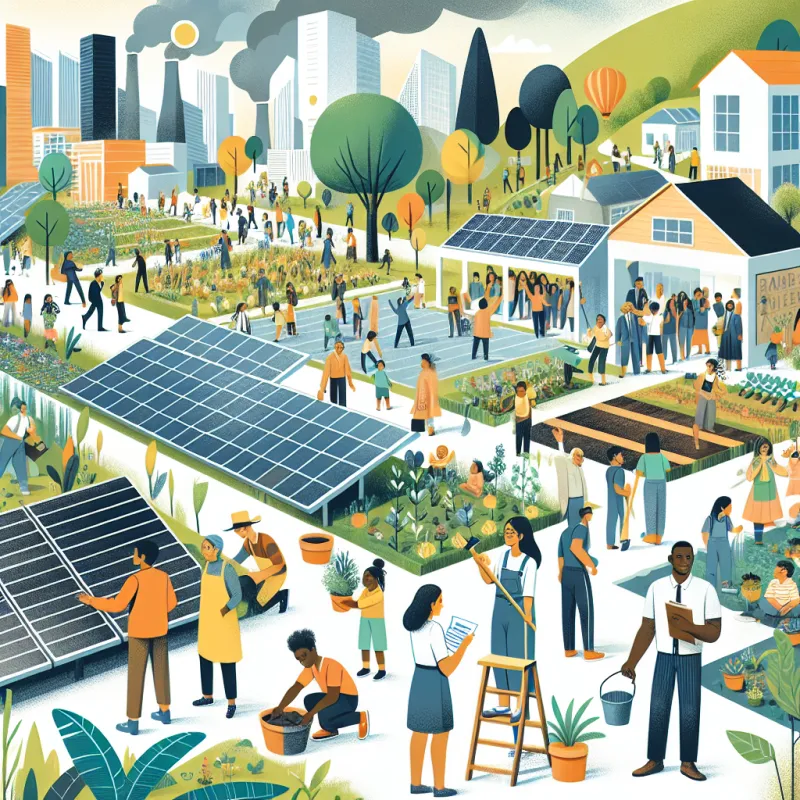
Photo: community organizers warehouse food distribution boxes sorting, via homesight.org
Breaking Things on Purpose: How Radical Maintenance Becomes the New Resistance
Somewhere in a warehouse on the outskirts of a mid-sized Midwestern city, a group of people is doing something that looks, from the outside, a lot like nothing. They're sorting produce. Stacking boxes. Scribbling on clipboards. But what they're actually doing — if you ask them, and if they trust you enough to tell you — is dismantling a supply chain, one rerouted pallet at a time.
This is what organized disruption looks like in 2025. Not a march. Not a manifesto. A spreadsheet and a cargo van.
The Quiet Architecture of Breaking Down
The language around this kind of work is deliberately slippery. "Sabotage" carries too much weight, too much drama. The people doing it prefer words like maintenance, repair, friction. One food sovereignty organizer in the St. Louis region — who asked to be identified only as Dara — puts it simply: "The system is already broken. We're just making sure it breaks in a direction that feeds people."
Dara's network operates inside the gaps of a regional food distribution system that technically functions but practically fails whole zip codes at a time. They intercept surplus food before it gets destroyed, reroute it through informal community hubs, and document the process in ways that are deliberately confusing to outside auditors. The goal isn't chaos. It's coverage.
"We're not trying to blow anything up," she says. "We're trying to make sure the failure lands somewhere useful."
This philosophy — strategic failure as care — is showing up in surprising places. It's in food networks like Dara's. It's in tenant organizing collectives that have learned to work through bureaucratic systems rather than around them, clogging eviction pipelines with paperwork the same way a body deploys white blood cells. And it's increasingly visible, or rather invisible, inside the tech industry.
The Algorithm Whisperers
In the Bay Area and in pockets of Brooklyn and Austin, there's a loose constellation of tech workers who describe themselves, in hushed terms, as practitioners of what one person called "deliberate drag." These are engineers, product managers, and data scientists who have decided that the most ethical thing they can do inside their companies is slow things down.
"I can't burn the company down," says one software engineer at a major platform company, speaking anonymously because their employment contract would make this conversation a fireable offense. "But I can make certain things take longer. I can make certain recommendations harder to implement. I can ask questions in meetings that cost weeks of velocity."
The work they describe isn't glamorous. It's the opposite of glamorous — it's bureaucratic, patient, and requires a tolerance for being perceived as slow or difficult. But it's also, they argue, a form of collective care directed at the users their companies have decided to exploit.
"The algorithm wants engagement at any cost," they explain. "My job, officially, is to optimize for that. My actual job, the one I've given myself, is to introduce enough friction that the worst outcomes just... don't happen as fast. Maybe don't happen at all."
This is maintenance as resistance. It doesn't make headlines. It doesn't go viral. That's the point.
Care Work Has Always Been Subversive
There's a rich intellectual tradition here that these practitioners are sometimes aware of and sometimes reinventing on their own. The concept of "reproductive labor" — the invisible work of keeping communities alive and functional — has long been understood by feminist scholars as a site of political power. What's new is the conscious weaponization of that framing.
Organizers in Chicago's mutual aid networks have started explicitly calling their work "infrastructure sabotage" — not because they're blowing anything up, but because they're building parallel systems that make the official ones irrelevant. When you can get your medications, your groceries, your childcare, and your legal support from a network of neighbors, the leverage that institutions hold over you starts to erode.
"Dependency is the mechanism of control," says Marcus, a community organizer on the South Side who has been building what he calls a "redundancy network" for three years. "When we create alternatives, we're not just solving problems. We're dissolving the thing that makes people afraid to say no."
The Ethics of Institutional Disruption
None of this is without tension. The people doing this work are acutely aware of the line between disruption and harm, and they spend a lot of time thinking about who absorbs the cost of their interventions.
"I think about this constantly," Dara says. "If I reroute food and the official distribution system notices and tightens up, did I make things worse? Probably sometimes. You have to be honest about that."
The tech worker is equally careful. "There are things I won't do. I won't introduce bugs that hurt users. I won't do anything that creates a security risk. The line for me is: does this protect people, or does it just make me feel better about working here?"
These are not abstract questions. They're the operational ethics of people doing real work in real systems with real consequences. And the fact that they're asking them at all is part of what distinguishes this kind of organizing from the more theatrical versions of disruption.
What Radical Maintenance Actually Looks Like
If you want to find this work, you have to look sideways. It's in the community fridge that keeps getting restocked despite the landlord's attempts to remove it. It's in the tenant who has learned to file every single form, on time, in triplicate, because the process is the point. It's in the engineer who asks, one more time, whether the team has considered the harm model.
It doesn't look like revolution. It looks like someone doing their job very carefully, or someone doing a job they were never hired for. It looks like maintenance.
But maintenance, as anyone who's ever kept something alive longer than it was supposed to last will tell you, is one of the most radical acts there is. Systems don't fail on their own. They fail because no one bothered to fix them. These people are choosing to fix the wrong things, in the wrong order, for the right reasons.
That's not sabotage. That's care with a wrench in its hand.