Five Ways Organizers Blew Up the Rulebook (And Built Something Better)
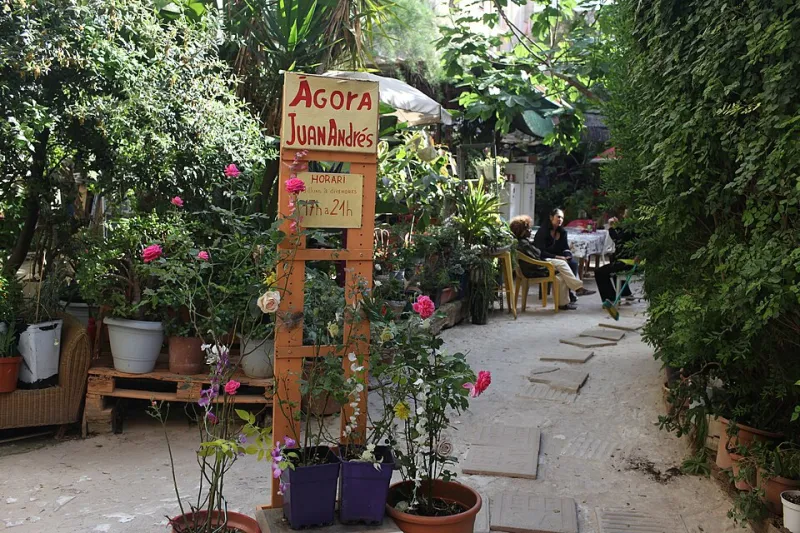
Photo: Jdsouder, CC BY-SA 4.0, via Wikimedia Commons
Let's be honest about something: a lot of the infrastructure we've built for social change is pretty good at sustaining itself and not always great at actually changing things. Grant cycles, board approval processes, organizational branding guidelines — these structures exist for reasons, but they also have a way of smoothing the edges off work that needs to be sharp.
The organizers, artists, and collectives on this list decided not to wait for institutional permission. What they built instead is messy, instructive, and genuinely inspiring. Here's what happened.
1. The Mutual Aid Network Model: Logistics as Politics
The Strategy: Build horizontal resource-sharing networks that operate outside both government services and traditional nonprofit charity structures.
Who Did It: When COVID hit in March 2020, mutual aid networks exploded across the US — but the form had been incubating for years in communities that couldn't wait for institutions to respond. Groups like Mutual Aid Disaster Relief (based out of New Orleans, drawing on lessons from post-Katrina organizing) and the Bed-Stuy Strong network in Brooklyn demonstrated that peer-to-peer resource distribution could move faster, reach further, and build more durable community relationships than top-down service delivery.
Crucially, these networks understood logistics as a political act. Deciding who gets resources, how decisions get made, and what relationships get built in the process — these aren't neutral operational questions. They're where the actual politics live.
The Challenges: Mutual aid networks are genuinely hard to sustain past the acute crisis moment that often births them. Volunteer burnout is real. Coordination without hierarchy is a skill that takes time to develop. And there's constant pressure — from funders, from media narratives, from well-meaning newcomers — to formalize in ways that can undercut the horizontal structure.
Adapting It: Start smaller than you think you need to. A block-level network of twenty people who actually know each other is more durable than a city-wide network of five hundred strangers. Invest in the relationships before the logistics.
2. The Zine as Infrastructure: Publishing Outside the Algorithm
The Strategy: Use self-published, physically distributed print media to build community, share knowledge, and create cultural touchstones that exist entirely outside digital platform dependency.
Who Did It: The zine tradition in the US runs from punk and riot grrrl through to contemporary political publishing, but what's interesting right now is how organizers are returning to physical print specifically because of digital saturation. Groups like the Barnard Zine Library, the Interference Archive in Brooklyn, and dozens of smaller local projects are treating zine-making not just as art practice but as organizing infrastructure — a way to circulate information, build collective identity, and create objects that live in physical space and pass from hand to hand.
The Chicago-based publication Area Chicago ran for years as a free print journal documenting neighborhood organizing and art practice, explicitly rejecting the idea that cultural documentation needed to be online to matter. The physical object created a different kind of conversation.
The Challenges: Distribution is the hard part. Getting print materials into the hands of people who would actually find them useful requires relationships and physical presence that digital publishing doesn't demand. It's slower. It's also, arguably, the point.
Adapting It: Don't try to replicate the reach of social media with print. Instead, design for depth over breadth. A hundred copies that circulate through a specific community and get read, shared, and kept is more valuable for organizing purposes than a thousand downloads that get forgotten.
3. The Pop-Up as Permanent: Temporary Space as Long-Term Strategy
The Strategy: Use temporary, low-commitment physical interventions — pop-up events, guerrilla installations, short-term space takeovers — to build sustained community relationships without the overhead of permanent infrastructure.
Who Did It: The Illuminator, a New York-based art collective that projects political messages onto buildings using a van-mounted projector, has operated this way for years. No permanent space, no fixed address, maximum mobility. They can respond to breaking news in hours. The overhead is minimal. The impact, particularly during Occupy Wall Street and subsequent movement moments, has been significant enough that their projections have become a recognizable part of the city's political visual landscape.
Similarly, groups working in the tradition of the Yes Men — the culture-jamming duo famous for elaborate institutional impersonation stunts — have demonstrated that temporary, theatrical interventions can generate lasting conversation and genuine institutional pressure without any of the permanence that traditional organizing assumes is necessary.
The Challenges: Temporary structures can struggle to build the kind of sustained relationships that create real power. There's a risk of mistaking visibility for impact. The pop-up model can also inadvertently reinforce a kind of activist tourism — people show up for the event and don't stick around for the work.
Adapting It: Use temporary interventions deliberately as relationship-building moments, not endpoints. The event is a door. What matters is what you do with the people who walk through it.
4. The Skills Share as Organizing: Knowledge Transfer as Power Building
The Strategy: Create structured, peer-to-peer learning environments that transfer practical skills — legal, technical, creative, financial — directly to community members, bypassing the credentialing and gatekeeping of professional institutions.
Who Did It: The Detroit Digital Justice Coalition built community technology education programs that explicitly connected digital literacy to questions of infrastructure, ownership, and power. Their work wasn't just about teaching people to use software — it was about building a community that understood technology as a political terrain.
The School for Poetic Computation in New York operates similarly, though in a more explicitly arts-focused register — running short, intensive programs that treat coding as a creative and critical practice rather than a vocational skill. The model intentionally keeps cohorts small and relationships central.
The Challenges: Skills shares can inadvertently reproduce the hierarchies they're trying to disrupt if facilitators aren't careful about how knowledge and expertise get framed. Who gets to teach, and whose knowledge counts, are political questions.
Adapting It: Center the knowledge that already exists in your community before importing expertise from outside. The most durable skills-share programs build on what people already know and make space for them to teach each other.
5. The Open-Source Campaign: Releasing Control to Multiply Impact
The Strategy: Develop campaign materials, frameworks, and tools and release them without copyright restriction, explicitly inviting adaptation, remix, and reuse by other organizations and individuals.
Who Did It: Shepard Fairey's HOPE poster for the 2008 Obama campaign became a template that thousands of people remixed for their own political purposes — some sanctioned, most not. Whatever you think of the original image, the proliferation demonstrated the organizing power of releasing control over a visual asset.
More recently, design collectives like For the People have created open-source toolkits of protest graphics and templates specifically intended for community use and adaptation. The Sunrise Movement's visual identity has been deliberately designed to be replicable by local chapters without requiring central approval — a structural choice that enables rapid scaling.
The Challenges: Releasing control means accepting that your work will be used in ways you didn't anticipate and might not endorse. That's uncomfortable. It also requires a genuine ideological commitment to the idea that the work belongs to the movement, not the organization.
Adapting It: Start with one thing. Release one toolkit, one template, one framework, with an explicit invitation to use and adapt it. See what comes back. That feedback is itself an organizing tool.
The Through-Line
Look across all five of these strategies and something consistent emerges: each one found a way to do more with less institutional scaffolding by treating relationships, knowledge, and creativity as the actual resources — not money, not staff, not square footage.
That's not a romantic notion. It's a practical one. Institutions are slow and expensive and risk-averse for structural reasons. The work that needs doing right now often can't wait.
The question isn't whether to work outside institutions or inside them. It's whether you're building something that can move at the speed the moment requires. These five approaches suggest it's possible. The rest is up to you.
