No Resume Required: The Secret Mentorship Webs Rewriting Who Gets to Learn
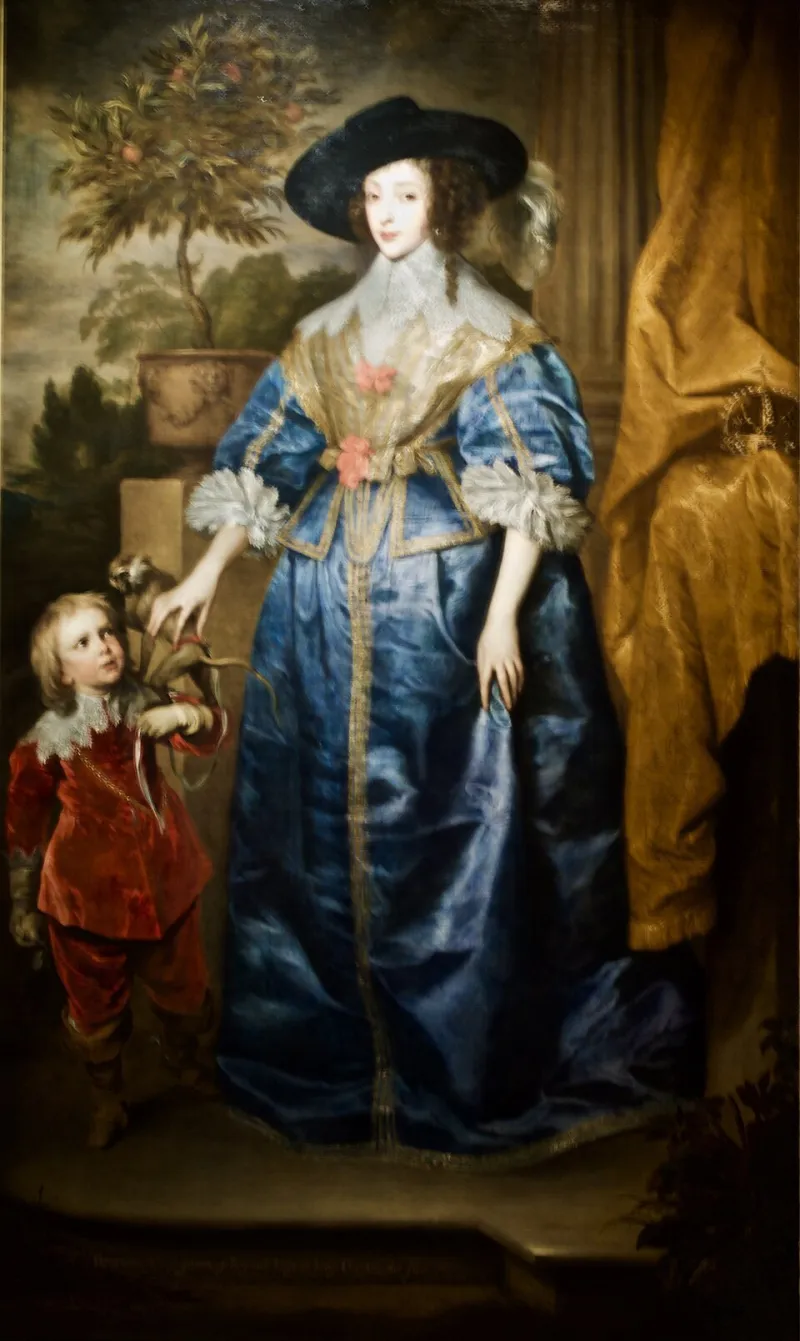
Photo: Anthony van Dyck, CC BY 2.0, via Wikimedia Commons
Forget the MFA application, the cold email to a gallery director, or the internship that pays in 'experience.' A new generation of artists and organizers is building mentorship networks that live entirely outside institutional walls — and they're working. These aren't formal programs with waiting lists and advisory boards. They're something stranger, more durable, and a lot harder to co-opt.
Call it the invisible handshake. You won't find it on a university website or a grant application. But if you've spent any real time in underground art scenes — in Detroit lofts, Oakland warehouses, Brooklyn Signal group chats, or rural New Mexico residencies run out of someone's barn — you've probably felt its effects. Someone knew someone. A door opened. Knowledge moved.
The Credential Trap and Why People Are Ditching It
Here's the honest problem with how most professional skill-building works in the arts: it's structured to replicate existing hierarchies. You go to the right school, you intern for the right person, you get the right letter of recommendation, and somewhere down the line an institution decides you're legit. The whole system is less about what you know and more about who already vouched for you — and who had the resources to put you in the room where vouching happens.
Credential inflation has made this worse. An MFA that once opened doors now barely gets you a callback. Meanwhile, the cost of that credential has ballooned to the point where pursuing it means starting your creative life with six-figure debt. The gatekeeping isn't incidental to the system — it is the system.
So people started building around it.
How These Networks Actually Work
The mechanics vary wildly, which is kind of the point. Some of these mentorship webs operate through encrypted group chats where established artists share real information — not the sanitized advice you'd get on a panel, but actual numbers, actual contacts, actual warnings about which residencies are toxic and which galleries quietly steal work. Others run as invitation-only workshops, usually in someone's home or studio, where the price of admission is a referral from someone already inside.
There are Discord servers with hundreds of members organized around specific disciplines — printmaking, sound art, documentary filmmaking — where senior practitioners field questions with a candor that would be career-risky in a more visible context. There are informal cohort systems where a mid-career artist takes on two or three emerging people not as assistants or apprentices in the traditional sense, but as intellectual peers on a longer timeline. The relationship is reciprocal in ways that formal mentorship rarely is.
What makes these structures work isn't just the information they carry — it's the trust infrastructure underneath them. You get in because someone trusts you enough to bring you in. That social vetting does something that a portfolio review can't: it filters for values, not just skill.
The Politics of Who Gets Invited
This is where it gets complicated, and it's worth sitting with the tension rather than smoothing it over.
Any system built on invitation and trust can replicate the same exclusions it's trying to escape. If the people doing the inviting are mostly white, mostly from coastal cities, mostly already networked into certain scenes, then the 'alternative' pathway ends up looking a lot like the original one with better aesthetics. Some of the most thoughtful practitioners building these networks are actively wrestling with this — building in explicit commitments to reach across geography, race, class, and discipline in ways that don't feel like diversity tokenism but are actually structural.
One organizer working out of Chicago described it this way: the network only stays honest if the people with the most access are constantly asking themselves who they're not seeing and why. That's not a comfortable question. But it's the right one.
Other networks have tackled this by making the entry point less about personal connection and more about demonstrated commitment to a shared practice or set of values. You don't need to know someone — you need to show up to the right open workshop, contribute something real, and earn your way into the inner circle through participation rather than proximity. It's not a perfect solution, but it's a different kind of filter.
What Gets Transmitted That Schools Can't Teach
Ask anyone who's been through one of these networks what they got out of it, and the answers are surprisingly consistent. It's not technique — you can learn technique from YouTube. It's the stuff that lives in the gap between formal instruction and actual practice.
How do you price your work without underselling yourself or pricing out the community you care about? How do you navigate a commission from an institution whose politics you don't fully trust? How do you protect your intellectual property in a scene that valorizes sharing? How do you say no to an opportunity that looks good on paper but will hollow you out? How do you survive financially during the years when your practice is serious but your income from it isn't?
These are the questions that mentorship networks answer — not in the abstract, but with specifics, with lived experience, with the kind of hard-won knowledge that institutions can't commodify because it's too contextual, too personal, too honest.
The Longer Game
What's emerging here isn't just an alternative to formal mentorship. It's an alternative theory of credibility itself. In these networks, your legitimacy comes from your relationships, your track record within a community, and your demonstrated values — not from a degree or an institutional affiliation. That's a genuinely different way of organizing professional life in the arts.
It's also, notably, harder to take away. An institution can revoke a fellowship. A gallery can drop you. A university can deny you tenure. But the trust you've built inside a network of people who know your work, your ethics, and your capacity to show up — that's not on anyone else's balance sheet.
The invisible handshake doesn't come with a certificate. It doesn't show up on a CV. But for a growing number of artists and organizers, it's the most real credential they have — and the one that actually opens doors worth walking through.