Basement Classrooms, Borrowed Projectors, and the Education Nobody's Grading
Photo: Filipinayzd, CC BY-SA 4.0, via Wikimedia Commons
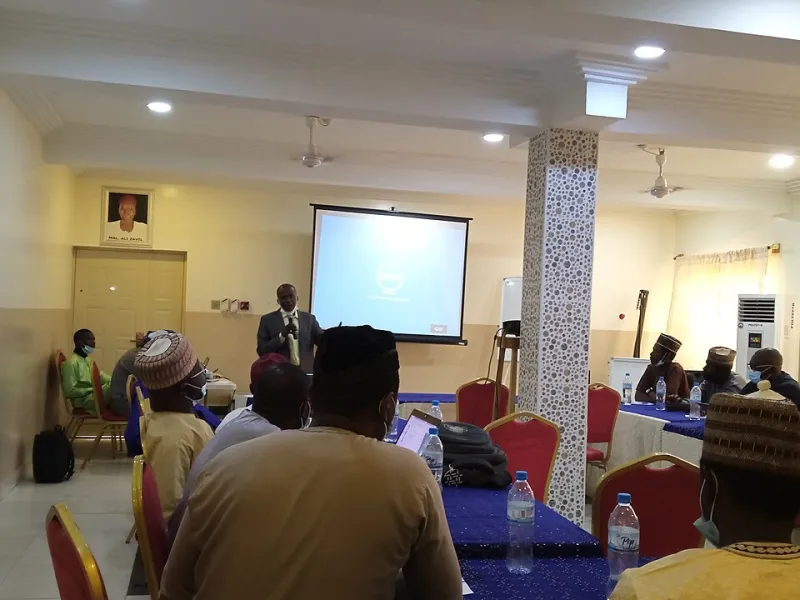
Somewhere in Chicago's South Side, a group of about fifteen people is crowded into a church annex on a Tuesday night. There's a folding table covered in photocopied readings, a laptop propped on a stack of books, and someone's kid asleep in the corner on a pile of coats. The person at the front of the room isn't a professor. She's a muralist. And she's teaching a six-week course on the Black radical tradition that no accredited institution in her city offers in anything close to this form.
This is what the invisible curriculum looks like. No tuition. No prerequisites. No standardized test at the end to prove you were paying attention.
Just people who decided that waiting for the official version of education to catch up was no longer an option.
What Gets Left Out (On Purpose)
The argument for alternative education isn't new. But what's happening right now feels different in scale and urgency. Artists, organizers, and community scholars are building full-on learning ecosystems — not just a workshop here or a reading group there, but sustained, intentional programs designed to fill the holes that formal schooling punches through people's understanding of the world.
Those holes are not accidental. When a high school curriculum spends three days on the Civil Rights Movement and zero days on COINTELPRO, that's a choice. When a college composition class teaches rhetoric without ever naming propaganda, that's a choice too. The invisible curriculum — the one running in basements and community centers and group chats — starts from the assumption that what's been omitted is often more important than what's been included.
That's the operating theory behind groups like the Akombo Collective in Philadelphia, which has been running free political education sessions since 2019. Their syllabus pulls from Frantz Fanon, adrienne maree brown, oral histories from local elders, and zines written by people who've never published anything with an ISBN. "We're not anti-intellectual," one of the collective's organizers told us. "We're anti the idea that only certain people get to produce knowledge."
The Teachers Who Aren't Called Teachers
One of the defining features of these spaces is the deliberate flattening of hierarchy. The person running the session one week might be a student the next. Expertise is understood as situational — the formerly incarcerated person in the room knows things about the carceral system that no criminology PhD can replicate, and that knowledge is treated accordingly.
In Los Angeles, a network of visual artists has been operating what they loosely call a "knowledge kitchen" — a rotating series of skill-shares and study sessions held in different people's studios and yards. The topics range from screen printing and mural permitting to tenant rights law and the history of redlining in Southern California. The format is deliberately informal. Nobody's taking attendance. The point is to make learning feel like something that belongs to you.
"School taught me that knowledge was something handed down from authority," says one of the organizers, a printmaker who's been involved since the project started in 2021. "What we're doing is more like — here's a pile of tools, let's figure out together what we can build."
Online and Underground
Not all of this is happening in physical space. Some of the most active nodes in this parallel education network exist entirely online, operating through Discord servers, Signal groups, and carefully maintained Google Drive folders full of reading lists that would make a university librarian nervous.
One server focused on Indigenous land sovereignty has members across fourteen states. They run asynchronous reading groups, host live sessions with elders and legal scholars, and maintain a resource library that includes documents the federal government has tried very hard to make inconvenient to access. Membership is by referral. There's no application. You get in because someone who trusts you thinks you're ready to engage seriously.
The gatekeeping here isn't about credentials — it's about commitment. Which is, honestly, a pretty different kind of gatekeeping than the one academia runs.
Survival as Curriculum
What separates a lot of these projects from the general category of "adult education" is the explicit integration of survival knowledge. We're talking about harm reduction, know-your-rights training, mental health first aid, and community defense — all framed not as add-ons but as core curriculum.
In Atlanta, a collective called the Study Hall has been embedding practical skills inside theoretical frameworks since 2020. A session on the history of mutual aid in the American South might be followed immediately by a workshop on building a neighborhood emergency fund. The idea is that the history explains the why, and the practical skill gives you the how. Neither one is complete without the other.
"We don't separate head knowledge from body knowledge," explains one of the Study Hall's lead facilitators, a poet and former public school teacher who left the classroom after a decade of fighting curriculum battles she kept losing. "If someone walks out of here knowing about the Poor People's Campaign but not knowing how to help their neighbor apply for emergency rental assistance, we haven't done our job."
What This Is Actually Threatening
Let's be honest about what's at stake. These spaces aren't just filling a gap — they're making an argument. The argument is that the institution doesn't get to be the final word on what's worth knowing, who gets to teach it, or what counts as legitimate learning. That's a genuinely radical claim, and institutions tend to notice when you make it.
Some of these projects have faced pressure — losing access to donated spaces, dealing with surveillance at public events, getting flagged by platforms for content that challenges official narratives. The response, mostly, has been to get more decentralized and more careful, not to back down.
The muralist in Chicago is already planning her next course. The topic: the history of education as a tool of colonial control. She's got a waiting list.
No projector this time — someone's lending her an actual screen.
Small upgrade. Same mission.