Ask First, Make Later: The Artists Redesigning Creative Space Around Consent
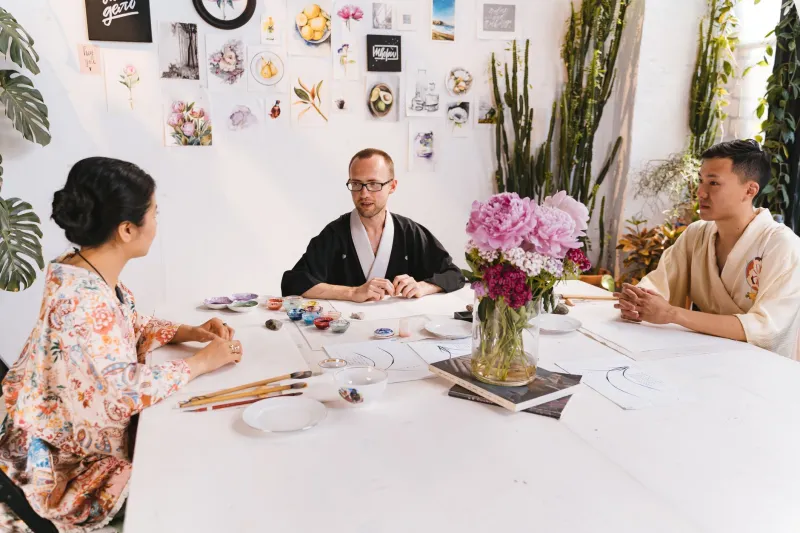
Somewhere between the release form you sign at a corporate event and the handshake agreement most DIY spaces still run on, there's a gap. A lot of artists have started living in that gap—not because they like paperwork, but because they've figured out that asking permission is actually a design decision. One that changes everything downstream.
This isn't about liability. It's about what happens when you treat consent as a creative constraint the same way you'd treat a budget limit or a square-footage problem. You get different work. Often, you get better work.
What "Consent-Centered" Actually Means Here
Let's be clear about what we're not talking about. We're not talking about the boilerplate checkbox at the bottom of an event registration page. We're talking about collectives and individual artists who are building consent into the actual architecture of their projects—deciding, before anything else, who gets to participate, on what terms, and with what kind of ongoing say in how the work evolves.
That might look like a performance space in Brooklyn that asks attendees to fill out a short intake form before entering—not to screen people out, but to understand what they're bringing in with them, what they need, and what they'd rather not have documented. Or a photo collective in Chicago that operates under a standing no-cameras policy unless every person in frame has explicitly said yes, not just once but for each specific use. Or a data art project in Los Angeles that publishes its collection practices in plain language before a single participant signs on, then lets them revoke access at any point.
None of these are legally required. All of them are chosen. That's the point.
Constraint as Generator
Here's the thing about designing around consent: it slows you down at the front end, and that slowness is generative. When you have to articulate—out loud, in writing, to actual human beings—what you're making and why and who benefits, you often discover that you weren't as clear on those questions as you thought.
Several collectives working this way describe a similar experience. The consent process becomes a kind of pre-production ritual that surfaces tensions and assumptions before they calcify into the work itself. One organizer put it plainly: "We found out in the intake conversation that half our participants had totally different expectations about what they'd signed up for. That would have been a disaster if we'd found out on day three of the residency."
The friction isn't a bug. It's doing real work.
And when participants know they were genuinely asked—not just technically notified—they tend to show up differently. There's a quality of presence that's hard to manufacture any other way. People take more risks when they feel like they actually chose to be there.
Photography, Data, and the Stuff Nobody Talks About
Two areas where consent frameworks are generating the most interesting experiments: documentation and data.
Documentation first. Most creative spaces have some version of a photography policy, but it's usually reactive—someone complains, a sign goes up. The collectives doing this intentionally are building photo consent into the rhythm of the event itself. Colored lanyards. Check-in conversations. Designated zones. Some are experimenting with dynamic consent—meaning participants can change their minds mid-event, and there's an actual system for honoring that.
What's surprising is how little this disrupts the work. A few artists expected resistance, especially from photographers and videographers who were used to shooting freely. Instead, they found that explicit consent often opened up more intimate access, not less. When someone knows you asked and they said yes, they're not performing for a camera they're trying to ignore. They're actually present with you.
Data is trickier, especially for projects that live partly online. Digital art projects and platforms are increasingly asking: what do we actually need to collect, and why? A handful of experimental platforms have gone further than any legal requirement demands—publishing data inventories, giving participants deletion rights, and in some cases building the entire backend around minimizing collection in the first place. Not because they were forced to. Because they decided that the relationship they wanted to have with their community required it.
The Trust Economy Is Real
There's a practical argument here that's worth making plainly: trust is a resource, and most creative spaces are running on fumes of it.
People are exhausted by being harvested. Their attention, their images, their stories, their behavioral data—it all gets scooped up constantly, usually without a real conversation. When a creative space shows up and actually asks, it lands differently. It creates a kind of relational credit that most institutions have spent the last decade burning through.
Collectives that have adopted explicit consent frameworks consistently report higher retention, stronger word-of-mouth, and participants who are more willing to do the hard, vulnerable, weird work that actually makes creative projects worth anything. The ask isn't a barrier to entry. It's the beginning of a relationship.
It's Not Perfect and Nobody's Pretending
Fair to say: consent frameworks have their own failure modes. They can become bureaucratic in ways that exclude people who don't navigate paperwork easily. They can create a false sense of safety if the underlying power dynamics of a space haven't changed. And they can be weaponized—used as cover for projects that are technically consensual but still extractive in practice.
The artists doing this work honestly are the first to acknowledge the limits. Consent isn't a magic fix. It's a practice. One that requires ongoing attention, feedback loops, and a genuine willingness to hear "no" without treating it as a problem to be solved.
The "no" part matters. A lot of consent frameworks look great until someone actually refuses something. How a space responds to refusal is where you find out whether the framework is real or decorative.
What This Looks Like Going Forward
The most interesting development isn't any single project—it's the fact that people are starting to share their frameworks with each other. Templates, protocols, scripts for difficult conversations, systems for handling mid-project changes of heart. There's a quiet commons forming around consent-centered practice, and it's being built by artists, not lawyers.
That matters. Legal consent and relational consent aren't the same thing, and the people building these frameworks understand the difference. They're not trying to protect themselves from liability. They're trying to build spaces where something real can happen—where the work isn't haunted by the feeling that someone got used to make it.
Asking first is a radical act in a culture that's gotten very comfortable taking. And it turns out, it's also just good design.